Today's
EarthStation1.com 15% Off Commemorative Memorial Title: Legacy
With Michael Wood World History TV Series DVD, MP4, USB Stick
Today, October 15, 2025
October 15: National Hispanic Heritage
Month (Spanish: Mes Nacional De La Herencia Hispana): -- A
month-long celebration concludes that began on the September 15,
1821 anniversary of the Central American countries of Guatemala,
El Salvador, Honduras, Nicaragua, and Costa Rica jointly declaring
independence from Spain, and lasts until October 15 in the United
States. National Hispanic Heritage Month recognizes the
contributions and influence of Hispanic Americans to the history,
culture, and achievements of the United States. There is certainly
too much about Hispanic culture to keep it all to just the one
day, so the celebrations are now spread out across an entire
month. That means there is plenty of time to enjoy all of the best
things about being Hispanic, from the food and music, to the
fashion and way of life. Even if you aren't of Hispanic or Latino
descent yourself, there will still be plenty that you can enjoy in
this busy month. There are many exhibitions and events held
throughout the whole of Hispanic Heritage Month, so there will
certainly be something that interests you to get involved with.
Even if you don't live near any events, you will be able to
celebrate in your own home. Many galleries and museums showcase
exhibitions of Hispanic and Latino artworks and notable artifacts.
Many cultural centers and music venues will also host special
concerts and theater shows to show off some of the best of
Hispanic and Latino culture as well. There are also many great
food events as well, including street food markets and festivals,
as well as sophisticated supper clubs and restaurant nights. Even
if you can't get involved with any of these public events, you
will still be able to celebrate Hispanic Heritage Month by cooking
up some delicious Hispanic and Latino dishes and meals in your own
home. Another great way to get involved with Hispanic Heritage
Month is to join in the discussion on social media. Many major
figures from the Hispanic and Latino communities are regularly
vocal on the likes of Twitter, and especially so in this important
month. Joining in with the discussion is a great way to find out
more and learn as much as possible about these significant
ethnicities. As you can see, Hispanic Heritage Month is a great
way to immerse yourself into some new culture and to learn a lot
about this fantastic community. It's also a great excuse to enjoy
a Latin party as well! So, where did Hispanic Heritage Month all
begin? Well, it dates back to 1968 when a Hispanic Heritage Week
was created under President Lyndon Johnson. It was then expanded
to encompass a whole month in 1988 by President Ronald Reagan.
Thanks to now being a whole month, the four weeks cover the
anniversary of independence for many Latin countries, including
Costa Rica, Guatemala, and El Salvador amongst a few others. Since
its inception, the Hispanic Heritage Month has become a huge deal
in the calendar of many Hispanic and Latino people around the
world, and it is celebrated by hundreds of thousands of people,
regardless of where they might be in the world.. On Sale @ 15% Off
Discount Till Midnight PT!
https://store.earthstation1.com/legacy-with-michael-wood-world-history-tv-series-dvd-mp4-us4.html
Today's
EarthStation1.com 15% Off Commemorative Memorial Title: The Story
Of Civilization: Will & Ariel Durant DVD, MP3 Download, USB
Today, October 15, 2025
October 15, 70 BC: #BOTD: #HBD! Virgil
(Vergil), ancient Roman poet of the Augustan period, one of Rome's
greatest poets, composer of three of the most famous poems in
Latin literature: 1) The Eclogues (Latin: "Selections")
(or Bucolics, poetry offering a dramatic and mythic interpretation
of revolutionary change in Rome between roughly 44 and 38 BC.), 2)
The Georgics (Latin: Georgica, from the Greek Georgika,
"Agricultural [Things]), and 3) the epic poem The Aeneid
(Latin: "The Story Of Aeneas"), considered the national
epic of ancient Rome since the time of its composition (d.
September 21, 19 BC) is #born Publius Vergilius Maroin the village
of Andes, near Mantua in Cisalpine Gaul (northern Italy, added to
Italy proper during his lifetime). The Aeneid, modeled after
Homer's Iliad and Odyssey, follows the Trojan refugee Aeneas as he
struggles to fulfill his destiny and reach Italy, where his
descendants Romulus and Remus were to found the city of Rome.
Virgil's work has had wide and deep influence on Western
literature, most notably Dante's Divine Comedy, in which Virgil
appears as Dante's guide through Hell and Purgatory. A number of
minor poems, collected in the Appendix Vergiliana, were attributed
to him in ancient times, but modern scholars consider his
authorship of these poems to be dubious. Virgil died according to
tradition when he traveled to the senatorial province of Achaea in
Greece about 19 BC to revise the Aeneid, and after meeting the
Roman Emperor Augustus in Athens, decided to return home, but
caught a fever while visiting a town near Megara, Greece. After
crossing to Italy by ship, weakened with disease, Virgil died in
Brundisium Harbor (modern Brindisi, Apulia, Italy, aged 50.
Virgil's Tomb (Italian: Tomba di Virgilio), a Roman burial vault
in Naples, is said to be the tomb, located at the entrance to the
old Roman tunnel known as the Crypta Neapolitana or Grotta Vecchia
in the Piedigrotta district of the city, between Mergellina and
Fuorigrotta. Augustus ordered Virgil's literary executors, Lucius
Varius Rufus and Plotius Tucca, to disregard Virgil's own wish
that the poem be burned, instead ordering it to be published with
as few editorial changes as possible. As a result, the text of the
Aeneid that exists may contain faults which Virgil was planning to
correct before publication. However, the only obvious
imperfections are a few lines of verse that are metrically
unfinished (i.e. not a complete line of dactylic hexameter). Some
scholars have argued that Virgil deliberately left these
metrically incomplete lines for dramatic effect. Other alleged
imperfections are subject to scholarly debate. On Sale @ 15% Off
Discount Till Midnight PT!
https://store.earthstation1.com/story-of-civilization-will-amp-ariel-durant-mp3-dvd-11-audiobo311.html
Today's
EarthStation1.com 15% Off Commemorative Memorial Title: The
Western Tradition TV Series DVD, MP4 Video Download, USB Drive
Today, October 15, 2025
October 15, 1529: The Ottoman Empire (The
Sublime Ottoman State, The Turkish Empire): The History Of The
Ottoman Empire: The Ottoman Wars: The Ottoman Wars In Europe: The
Ottoman-Habsburg Wars: Habsburg-Ottoman Wars In Hungary
(1526-1568): The Ottoman-Habsburg War (1565-1568): The Siege Of
Vienna (September 27 - October 15, 1529): -- The Siege Of Vienna
ends as the Austrians rout the invading Turks, turning the tide
against almost a century of unchecked conquest throughout eastern
and central Europe by the Ottoman Empire. The Siege Of Vienna
began on September 27, 1529 with the first attempt by the Ottoman
Empire, led by Suleiman The Magnificent, to capture the city of
Vienna, Austria. Suleiman attacked the city with over 100,000 men
against 21,000 defenders led by Niklas Graf Salm. Despite being
outnumbered approximately five to one, Vienna was able to survive
the siege, which ultimately lasted just over two weeks. The siege
signalled the pinnacle of the Ottoman Empire's power and the
maximum extent of Ottoman expansion in central Europe. Thereafter,
150 years of bitter military tension and reciprocal attacks
ensued, culminating in the Battle of Vienna of 1683, which marked
the start of the 15-year-long Great Turkish War. The inability of
the Ottomans to capture Vienna in 1529 turned the tide against
almost a century of conquest throughout eastern and central
Europe. The Ottoman Empire had previously annexed Central Hungary
and established a vassal state in Transylvania in the wake of the
Battle of Mohacs. The failure of the first Siege Of Vienna stopped
the tide of Ottoman conquest which had been flooding up the Danube
Valley for a century. There is speculation by some historians that
Suleiman's main objective in 1529 was actually to assert Ottoman
control over the whole of Hungary, the western part of which
(known as Royal Hungary) was under Habsburg control. The decision
to attack Vienna after such a long interval in Suleiman's European
campaign is viewed as an opportunistic manoeuvre after his
decisive victory in Hungary. Other scholars theorise that the
suppression of Hungary simply marked the prologue to a later,
premeditated invasion of Europe. On Sale @ 15% Off Discount Till
Midnight PT!
https://store.earthstation1.com/the-western-tradition-dvd-set-all-52-shows-13-d5213.html
Today's
EarthStation1.com 15% Off Commemorative Memorial Title: Legacy
With Michael Wood World History TV Series DVD, MP4, USB Stick
Today, October 15, 2025
October 15, 1542: #BOTD: #HBD! Akbar
(Persian: "Great"), popularly known as Akbar I and later
Akbar The Great (literally "Great The Great"), third
Mughal emperor who reigned from 1556 to 1605 (d. October 27, 1605)
is #born Abu'l-Fath Jalal-ud-din Muhammad Akbar in Amarkot,
Rajputana (present-day Umerkot, Sindh, Pakistan). Akbar succeeded
his father, Humayun, under a regent, Bairam Khan, who helped the
young emperor expand and consolidate Mughal domains in India. A
strong personality and a successful general, Akbar gradually
enlarged the Mughal Empire to include nearly all of the Indian
Subcontinent north of the Godavari river. His power and influence,
however, extended over the entire country because of Mughal
military, political, cultural, and economic dominance. To unify
the vast Mughal state, Akbar established a centralised system of
administration throughout his empire and adopted a policy of
conciliating conquered rulers through marriage and diplomacy. To
preserve peace and order in a religiously and culturally diverse
empire, he adopted policies that won him the support of his
non-Muslim subjects. Eschewing tribal bonds and Islamic state
identity, Akbar strove to unite far-flung lands of his realm
through loyalty, expressed through an Indo-Persian culture, to
himself as an emperor who had near-divine status. Akbar died of
dysentery in Fatehpur Sikri, Agra, Mughal Empire (present-day
Uttar Pradesh, India), aged 63. He is buried at his mausoleum in
Sikandra, Agra, which lies a kilometre next to the tomb of
Mariam-uz-Zamani, his favourite and chief consort, a remarkable
woman, extremely beautiful, widely known for her grace, intellect
and liberalism, responsible for Akbar's shift in religious and
social policies towards tolerance of religious differences and
inclusive policies cultural policies within an expanding
multi-ethnic and multi-religious empire. On Sale @ 15% Off
Discount Till Midnight PT!
https://store.earthstation1.com/legacy-with-michael-wood-world-history-tv-series-dvd-mp4-us4.html
Today's
EarthStation1.com 15% Off Commemorative Memorial Title: Aviation
History Films Collection DVD MP4 Video Download
Today, October 15, 2025
October 15, 1783: Aviation: The History
Of Aviation: The History Of Civil Aviation: Maiden Flights: -- The
Montgolfier Brothers' hot air balloon, piloted by Jean-Francois
Pilatre De Rozier, makes the first recorded human (tethered)
ascent. De Rozier and D'Arlandes made their first untethered
flight in a Montgolfier hot air balloon on November 21, 1783. He
later died when his balloon crashed near Wimereux in the
Pas-de-Calais during an attempt to fly across the English Channel.
He and his companion, Pierre Romain, thus became the first known
fatalities in an air crash. He also risked himself while
researching the flammability of hydrogen: in "A Short History
of Nearly Everything", Bill Bryson writes "In France, a
chemist named Pilatre De Rozier tested the flammability of
hydrogen by gulping a mouthful and blowing across an open flame,
proving at a stroke that hydrogen is indeed explosively
combustible and that eyebrows are not necessarily a permanent
feature of ones face". On Sale @ 15% Off Discount Till
Midnight PT!
https://store.earthstation1.com/aviation-history-films-2-dual-layer-dvd-se2.html
Today's
EarthStation1.com 15% Off Commemorative Memorial Title: Napoleon's
Last Battle: The Memorial Of Saint Helena MP4 Download DVD
Today, October 15, 2025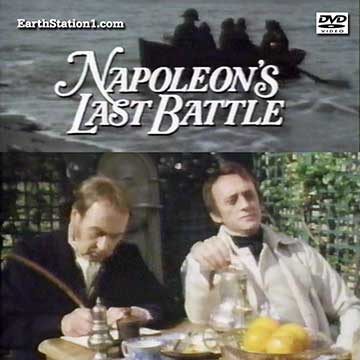
October 15, 1815: The Age Of
Enlightenment (The Enlightenment, The Age Of Reason): The Age Of
Revolution: The Atlantic Revolutions: The French Revolution: The
French Revolutionary And Napoleonic Wars (The Great French War)
(The French Revolutionary Wars, The Napoleonic Wars): The
Napoleonic Wars: Napoleon's Exile On Saint Helena: -- Napoleon
Bonaparte arrives on the Island of Saint Helena, 1,870 km (1,162
mi) from the west coast of Africa in the Atlantic Ocean, beginning
a British-imposed exile following his defeat at The Battle Of
Waterloo. The British also took the precaution of sending a small
garrison of soldiers to both Saint Helena and the uninhabited
Ascension Island, which lay between St. Helena and Europe, to
prevent any escape from the island. Napoleon was moved to Longwood
House on Saint Helena in December 1815; it had fallen into
disrepair, and the location was damp, windswept and unhealthy. The
Times published articles insinuating the British government was
trying to hasten his death. Napoleon often complained of the
living conditions of Longwood House in letters to the island's
governor and his custodian, Hudson Lowe, while his attendants
complained of "colds, catarrhs, damp floors and poor
provisions." Modern scientists have speculated that his later
illness may have arisen from arsenic poisoning caused by copper
arsenite in the wallpaper at Longwood House. With a small cadre of
followers, Napoleon dictated his memoirs and grumbled about the
living conditions. Lowe cut Napoleon's expenditure, ruled that no
gifts were allowed if they mentioned his imperial status, and made
his supporters sign a guarantee they would stay with the prisoner
indefinitely. When he held a dinner party, men were expected to
wear military dress and "women [appeared] in evening gowns
and gems. It was an explicit denial of the circumstances of his
captivity". While in exile, Napoleon wrote a book about
Julius Caesar, one of his great heroes. He also studied English
under the tutelage of Count Emmanuel de Las Cases with the main
aim of being able to read English newspapers and books, as access
to French newspapers and books was heavily restricted to him on
Saint Helena. Napoleon also devoted himself to compiling a book
"Memorial de Ste-Helene", an account which reflected his
self-depiction as a liberal, visionary ruler for European
unification, deposed by reactionary elements of the Ancien Regime.
Another pastime of Napoleon's while in exile was playing card
games. The number of patiences named in his honour seems to
suggest that he was an avid player of the solitary game. Napoleon
at St Helena is described as being a favourite of his, while
Napoleon's Favourite (or St. Helena) is clearly a contender. Other
games with a Napoleonic theme include Napoleon's Flank, Napoleon's
Shoulder, Napoleon's Square and Little Napoleon Patience. However,
Arnold argues that, while Napoleon played cards in exile, the
notion that he played numerous patience games is "based on a
misunderstanding". There were rumours of plots and even of
his escape from Saint Helena, but in reality, no serious attempts
were ever made. For English poet Lord Byron, Napoleon was the
epitome of the Romantic hero, the persecuted, lonely, and flawed
genius. On Sale @ 15% Off Discount Till Midnight PT!
https://store.earthstation1.com/napoleon39s-last-battle-the-memorial-of-saint-helena-mp4-download-394.html
Today's
EarthStation1.com 15% Off Commemorative Memorial Title: Forgotten
Fatherland: Nueva Germania Aryan Settlement DVD, MP4, USB
Today, October 15, 2025
October 15, 1844: #BOTD: #HBD! Friedrich
Nietzsche, German composer, poet, philologist, philosopher, and
cultural critic (d. August 25, 1900) is #born Friedrich Wilhelm
Nietzsche in the town of Roecken (now part of Luetzen), near
Leipzig, in the Prussian Province of Saxony. He was a German
scholar of Latin and Greek whose work has exerted a profound
influence on Western philosophy and modern intellectual history.
At age 44, he suffered a collapse and a complete loss of his
mental faculties. He lived his remaining years in the care of his
mother until her death in 1897, and then with his sister Elisabeth
Forster-Nietzsche. After his death, Elisabeth Forster-Nietzsche
became the curator and editor of her brother's manuscripts,
reworking Nietzsche's unpublished writings to fit her own German
nationalist ideology while often contradicting or obfuscating his
stated opinions, which were explicitly opposed to antisemitism and
nationalism. Thereby, through her published editions, Nietzsche's
work became associated with fascism and Nazism. Friedrich
Nietzsche died of a stroke at about noon aged 55 in Weimar,
Saxe-Weimar-Eisenach, German Empire. His sister Elisabeth
Forster-Nietzsche had him buried beside his father at the church
in Rocken near Lutzen in the Burgenlandkreis district of
Saxony-Anhalt, Germany. On Sale @ 15% Off Discount Till Midnight
PT!
https://store.earthstation1.com/forgotten-fatherland-dvd-nueva-germania-aryan-settlement-dvd-mp4-us4.html
Today's
EarthStation1.com 15% Off Commemorative Memorial Title: The Shadow
Of Jack The Ripper MP4 Video Download DVD
Today, October 15, 2025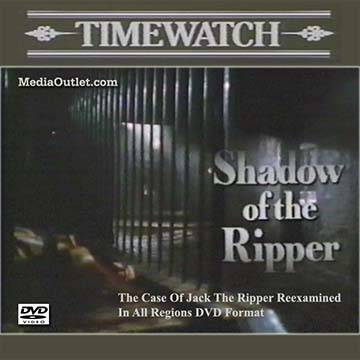
October 15, 1888: Crime: Crime In The
United Kingdom: Murder: Serial Murders: The Whitechapel Murders
(The Jack The Ripper Murders, The Leather Apron Murders): Jack The
Ripper Letters: The From Hell Letter (The Lusk Letter): -- The
"From Hell" Letter, a letter sent alongside half of a
preserved human kidney from a person who claimed to be the serial
killer known as Jack The Ripper, is sent postmarked on 15 October
1888 to George Lusk, the chairman of the Whitechapel Vigilance
Committee, who received it the following day. The author of this
letter claimed to have fried and eaten the other half. Police,
press, and public alike received many letters claiming to be from
the Whitechapel Murderer, with investigators at one stage having
to deal with an estimated 1,000 letters related to the case.
However, the "From Hell" letter is one of the few
articles of correspondence that has received serious consideration
as to actually being genuine. Nonetheless, opinions remain divided
with regards to the letter's authenticity. The murders committed
by Jack the Ripper have attracted much attention in popular
culture for decades, with several factual and fictional works
directly making reference to the "From Hell" letter. The
murderer killed and mutilated at least five female victims in the
Whitechapel area of London over a period of several months, the
case attracting a great deal of attention both at the time and
since. The exact number of victims has never been conclusively
proven, and the identity of the perpetrator of the Whitechapel
killings has likewise remained unsolved. Postmarked on 15 October
1888, the letter was received by George Lusk, the chairman of the
Whitechapel Vigilance Committee, the following day. The message
was accompanied by a preserved section of a human kidney; the
letter's writer claimed to have eaten the other half of the organ.
The police received a large number of letters claiming to be from
the murderer, at one point having to deal with an estimated 1,000
letters related to the case, but the "From Hell" message
is one of the few that has received serious attention as possibly
being genuine. Opinions on the matter have remained divided. On
Sale @ 15% Off Discount Till Midnight PT!
https://store.earthstation1.com/timewatch-shadow-of-jack-the-ripper-dvd.html
Today's
EarthStation1.com 15% Off Commemorative Memorial Title: The
Longest Hatred: Antisemitism & Jewish Persecution DVD, MP4,
USB
Today, October 15, 2025
October 15, 1894: Discrimination: Jewish
History: France: The History Of France: Fin De Siecle:
Antisemitism: The Dreyfus Affair (French: Affaire Dreyfus): --
French Colonel Alfred Dreyfus is arrested for spying. He was a
French Jewish artillery officer whose trial and conviction in 1894
on false accusations of treason became one of the most tense
political dramas in modern French history with a wide echo in all
Europe. Known today as the Dreyfus Affair, the incident eventually
ended with Dreyfus' complete exoneration. The Dreyfus Affair was a
political scandal that divided the Third French Republic from 1894
until its resolution in 1906. The affair is often seen as a modern
and universal symbol of injustice, and it remains one of the most
notable examples of a complex miscarriage of justice and
antisemitism. The major role played by the press and public
opinion proved influential in the lasting social conflict. The
scandal began in December 1894 with the treason conviction of
Captain Alfred Dreyfus, a young French artillery officer of
Alsatian and Jewish descent. Sentenced to life imprisonment for
allegedly communicating French military secrets to the German
Embassy in Paris, Dreyfus was imprisoned on Devil's Island in
French Guiana, where he spent nearly five years. Evidence came to
light in 1896-primarily through an investigation instigated by
Georges Picquart, head of counter-espionage-identifying a French
Army major named Ferdinand Walsin Esterhazy as the real culprit.
After high-ranking military officials suppressed the new evidence,
a military court unanimously acquitted Esterhazy after a trial
lasting only two days. The Army then accused Dreyfus with
additional charges based on falsified documents. Word of the
military court's framing of Dreyfus and of an attempted cover-up
began to spread, chiefly owing to J'accuse_!, a vehement open
letter published in a Paris newspaper in January 1898 by writer
Emile Zola. Activists put pressure on the government to reopen the
case. In 1899, Dreyfus was returned to France for another trial.
The intense political and judicial scandal that ensued divided
French society between those who supported Dreyfus (now called
"Dreyfusards"), such as Sarah Bernhardt, Anatole France,
Henri Poincare and Georges Clemenceau, and those who condemned him
(the anti-Dreyfusards), such as Edouard Drumont, the director and
publisher of the antisemitic newspaper La Libre Parole. The new
trial resulted in another conviction and a 10-year sentence, but
Dreyfus was given a pardon and set free. Eventually all the
accusations against Dreyfus were demonstrated to be baseless. In
1906 Dreyfus was exonerated and reinstated as a major in the
French Army. He served during the whole of World War I, ending his
service with the rank of lieutenant-colonel. He died in 1935. The
affair from 1894 to 1906 divided France deeply and lastingly into
two opposing camps: the pro-Army, mostly Catholic
"anti-Dreyfusards" and the anticlerical, pro-republican
Dreyfusards. It embittered French politics and encouraged
radicalization. On Sale @ 15% Off Discount Till Midnight PT!
https://store.earthstation1.com/the-longest-hatred-antisemitism-amp-jewish-persecution-dvd-mp3-us3.html
Today's
EarthStation1.com 15% Off Commemorative Memorial Title: America:
The Second Century Documentary Series DVD, Download, USB
Today, October 15, 2025
October 15, 1908: #BOTD: #HBD! John
Kenneth Galbraith, also known as Ken Galbraith, esteemed and
influential Canadian-American economist, diplomat, public
official, and activist Democrat who served in the administrations
of Franklin D. Roosevelt, Harry S. Truman, John F. Kennedy, and
Lyndon B. Johnson, public intellectual whose books on economic
topics were bestsellers from the 1950s through the 2000s (d. April
29, 2006) is #born in Iona Station, Ontario, Canada to Canadians
of Scottish descent, Sarah Catherine (Kendall) and Archibald
"Archie" Galbraith. His political activism, literary
output and outspokenness brought him wide fame during his
lifetime. Galbraith was one of the few to receive both the World
War II Medal Of Freedom (1946) and the Presidential Medal Of
Freedom (2000) for his public service and contributions to
science. John Kenneth Galbraith OC also served as United States
Ambassador to India under the Kennedy administration. As an
economist he leaned toward post-Keynesian economics from an
institutionalist perspective. Galbraith was a long-time Harvard
faculty member and stayed with Harvard University for half a
century as a professor of economics. He was a prolific author and
wrote four dozen books, including several novels, and published
more than a thousand articles and essays on various subjects.
Among his works was a trilogy on economics, American Capitalism
(1952), The Affluent Society (1958), and The New Industrial State
(1967). Some of his work has been criticized by economists Milton
Friedman, Paul Krugman, Robert Solow, and Thomas Sowell. John
Kenneth Galbraith died in Cambridge, Massachusetts, of natural
causes at the age of 97, after a two-week stay in a hospital. He
is interred at Indian Hill Cemetery in Middletown, Connecticut. On
Sale @ 15% Off Discount Till Midnight PT!
https://store.earthstation1.com/america-the-second-century-us-2nd-100-years-history-621006.html
Today's
EarthStation1.com 15% Off Commemorative Memorial Title: D-Day
Radio Broadcasts 24 Hrs Of News + Songs & More DVD MP3 USB
Drive
Today, October 15, 2025
October 15, 1909: #BOTD: #HBD! Robert
Trout, best known as Bob Trout, American broadcast news reporter
known as the "Iron Man Of Radio" for his ability to ad
lib while on the air, as well as for his stamina, composure, and
elocution, a radio and television journalist who was behind the
microphone for many of broadcasting's firsts and was best
remembered for his radio work for CBS News during the years of the
Great Depression and World War II (d. November 14, 2000) is #born
Robert Albert Blondheim in Washington, D.C.; he added the Trout
name early in his radio career. He was the first to report on live
congressional hearings from Capitol Hill, first to transmit from a
flying airplane and, by some definitions, the first to broadcast a
daily news program, creating the news anchorman role. He was the
man who used the on-air label "fireside chat" in
reference to radio broadcasts of President Franklin D. Roosevelt
during the Great Depression and World War II; Trout himself gave
credit for the genesis of the phrase to Harry Butcher, a CBS vice
president in Washington. Trout entered broadcasting in 1931 as an
announcer at WJSV, an independent station in Alexandria, Virginia,
founded in the early 1920s by James S. Vance. In the summer of
1932 WJSV was acquired by CBS, bringing Trout into the CBS fold.
(the station known as WJSV is now WFED in Washington, D.C.; since
1971, the WJSV call letters are owned by the Morris School
District and belong to the student-run radio station of Morristown
High School in Morristown, New Jersey). It was Bob Trout in the
mid-1930s who passed on to a then-new CBS executive, Edward R.
Murrow, the value of addressing the radio audience intimately, as
if the announcer was talking to one person. Trout played a key
role in Murrow's development as a broadcaster, and the two would
remain colleagues until Murrow departed the network in 1961, and
friends until Murrow's death in 1965. On Sunday night, March 13,
1938, after Adolf Hitler's Germany had annexed Austria in the
Anschluss, Trout hosted a shortwave "roundup" of
reaction from multiple cities in Europe - the first such
multi-point live broadcast on network radio. The broadcast
included reports from correspondent William L. Shirer in London
(on the annexation, which he had witnessed firsthand in Vienna)
and Murrow, who filled in for Shirer in Vienna so that Shirer
could report without Austrian censorship. The special gave Trout
the distinction of being one of broadcasting's first true
"anchormen" (in the sense of handing off the air to
someone else as if it were a baton). It became the inspiration for
the CBS World News Roundup, a forerunner of television's CBS
Evening News, which began later in 1938 and to this day continues
to air each weekday morning and evening on the CBS Radio Network.
Trout emceed not only news and special events but also occasional
entertainment programs during his first tenure at CBS, from 1932
to 1948, including a stint in London while Murrow was back in the
United States. He was the announcer on CBS' The American School of
the Air and on Professor Quiz, radio's first true quiz program.
Trout anchored the network's live early morning coverage of the
June 6, 1944 Normandy invasion on D-Day by the allied forces and
was behind the microphone when the bulletins announcing the end of
World War II in Europe, and later Japan, came over the air.
Beginning April 1, 1946, Trout anchored a daily 15-minute CBS
radio newscast, The News 'til Now, sponsored by Campbell's Soup.
His year-and-a-half tenure on the program ended in September 1947,
when Murrow, who had been CBS's vice president for public affairs,
returned to on-air work and took over the broadcast. Trout left
CBS for NBC, where from 1948 to 1951 he was the first emcee of the
game show, Who Said That?, in which celebrities try to determine
the speaker of quotations taken from recent news reports. Trout
returned to CBS in 1952. He doubled as a network correspondent and
as main anchor of local evening news at CBS' New York City
television flagship, WCBS-TV until June 17, 1965. When the July
1964 CBS Television coverage of the Republican National Convention
in San Francisco (anchored by Walter Cronkite) was trounced in the
ratings by NBC's Chet Huntley and David Brinkley, CBS replaced
Cronkite with Bob Trout and Roger Mudd for the Democratic party's
August gathering in Atlantic City. The duo failed to overtake
Huntley and Brinkley, and Cronkite was back at the TV anchor desk
when the conventions rolled around again four years later in Miami
and Chicago. Trout remained on radio but also did in-depth news
features for the TV network, including field reports for the CBS
News broadcast 60 Minutes. One overlooked aspect of Trout's career
was his annual appearance on bandleader Guy Lombardo's New Year's
Eve specials on CBS-TV. From 1955 through 1961, Trout would report
from Times Square during the broadcast, and count down the final
seconds to midnight (Eastern Standard Time) for the start of the
new year. On the day President John F. Kennedy was assassinated,
November 22, 1963, Trout took to the streets of Manhattan and
spoke on camera with New Yorkers and tourists seeking comments and
reactions to the tragic events. As a member of the news team
covering the live events of that day, Trout reflected on the
sudden death of President Franklin Roosevelt eighteen years
earlier in 1945, which he also reported in a CBS broadcast. Trout
remained at CBS through the early 1970s. He later worked for ABC,
serving mostly as a correspondent based in Madrid, where he lived
for most of the last two decades of his life. He was on the ABC
News team that covered the election of Pope John Paul II in 1978.
In 1979, Trout received a Peabody Award for his distinguished
broadcasting career. Near the end of his life, he broadcast
commentaries and essays for the program All Things Considered on
National Public Radio. Some of them were reminiscences of 20th
century events he covered, accompanied by recordings. Trout also
continued to attend political conventions, earning him the
distinction of having interviewed every U.S. President from
Franklin D. Roosevelt to Bill Clinton. In 2000, he joined his old
colleague Roger Mudd for a History Channel look at the quadrennial
gatherings. While reminiscing on NPR on July 9, 1999, Trout
admitted that an oft-played recording of his announcing the end of
World War II - "my greatest hit, as it were" - broadcast
at 7 p.m. in New York City on August 14, 1945, was actually a
recreation. In 1948, he was asked to re-record the opening portion
of his historic broadcast announcing Japan's surrender so that a
"cleaned-up" version of that announcement could be
included in the first volume of Ed Murrow and Fred Friendly's "I
Can Hear It Now" historical record album series. The disc
recording of the original broadcast was deemed "too messy to
use." Trout played for his NPR listeners the original
transcription of what actually was heard on CBS Radio at that
moment: his live introduction of a surrender announcement by
British Prime Minister Clement Attlee - followed, not by Attlee,
but by the Big Ben chimes. Then the network switched back to New
York, where Trout was standing near the teletypes outside CBS
Radio's Studio Nine, and listeners heard CBS news director Paul
White (listening on a phone line to the White House) inform Trout
that the Administration itself announced the surrender. This
allowed Trout to announce the news a few seconds before Attlee
made the announcement in his radio speech. Trout's broadcast is
also believed to be the first broadcast news report confirming
that the surrender was official, beating ABC Radio, the Mutual
Broadcasting System, and NBC Radio by a few seconds. Trout then
intoned: "The Japanese have accepted our terms fully! That is
the word we have just received (newsroom cheers) from the White
House in Washington and (Trout chuckles) I didn't expect to hear a
celebration here in our newsroom in New York, but you can hear one
going on behind me. We switched to London, I don't know what
happened, I'm not even sure whether you heard the first words of
Prime Minister Attlee or not. I couldn't hear anything in our
speaker here, with the confusion. Suddenly we got the word from
our private telephone wire from the White House in Washington. The
Japanese have accepted FULLY the surrender terms of the United
Nations. THIS, ladies and gentlemen, is the end of the Second
World War! It is not, of course, the official V-J day, but the
United Nations, on land, on sea, on air, to the four corners of
the earth and the seven seas, are united and are victorious!"
For the last twenty years of his life, Trout and his wife lived in
Madrid and in New York City, where they kept a West Side
apartment. He died at age 91 on November 14, 2000 in the Lenox
Hill Hospital in Manhattan; there were no immediate survivors. His
wife, the former Catherine "Kit" Crane, whom he married
in 1938, had died in 1994. They had no children. Kit was "a
significant partner in his career, serving as his personal
manager, providing him with research for his broadcasts, and
critiquing his on-air performances"; together, they
maintained a large, systematically organized collection of his
papers, correspondence, press clippings, photographs, and
recordings, which was bequeathed to the Dolph Briscoe Center for
American History at the University of Texas at Austin. His burial
details are not publicly disclosed. On Sale @ 15% Off Discount
Till Midnight PT!
https://store.earthstation1.com/dday-broadcasts-mp3-dvd-all-24-hours-plus-highlights-and-so324.html
Today's
EarthStation1.com 15% Off Commemorative Memorial Title: Target For
Tonight (1941) RAF Bomber Command DVD, Download, USB Drive
Today, October 15, 2025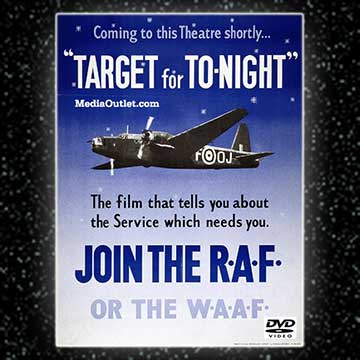
October 15, 1912: #BOTD: #HBD! Constance
Babington Smith MBE, known informally as "Babs", British
milliner, soldier, MI4 photo interpreter, journalist, writer,
beauty and Legion Of Merit Awardee, best known for her work in
imagery intelligence during World War II and as the discoverer of
the existence of the German V-1 Flying Bomb when she spotted one
at Peenemunde, Germany's Peenemunde Army Research Center (d. July
31, 2000) is #born in Puttenham, Surrey, Southern England, the
seventh of nine children of the senior civil servant Sir Henry
Babington Smith, a scion of the Babington family, an Anglo-Irish
and English gentry family whose Anglo-Irish branch is still extant
today. Her mother, born Lady Elizabeth Bruce, was the daughter of
the 9th Earl of Elgin, making Constance a granddaughter of a
Viceroy of India and a great-great-granddaughter of the man who
bought the Elgin Marbles, also known as the Parthenon Marbles, a
collection of Classical Greek marble sculptures made under the
supervision of the architect and sculptor Phidias and his
assistants. Her father died in 1923, when she was ten. By then,
her eldest brothers were already adults, whilst her youngest
sister was just two years old. She was educated at home at the
family home 'Chinthurst', in Wonersh in Surrey. She finished her
education in France and moved to London in adult life. A trained
milliner (hat-maker, or hatter), she worked before the war for
Aage Thaarup, a Danish-born milliner who ran a celebrated
hatmaking business in London between the 1930s and 1970s. She also
worked for Vogue magazine in London, before venturing into
journalism with The Aeroplane magazine. Frank Whittle, the
inventor of the first British jet engine, met her once and became
quite enamoured of 'Babs' and made enquiries about the scent she
used. He described her as 'an attractive young lady who combined
considerable personal charm with an intense interest in aircraft'
(her perfume was Guerlain's 'L'Heure Bleue'; she later wrote she
wore it to counteract the masculinity of her uniform). Her
knowledge of aircraft took her into the Women's Auxiliary Air
Force (WAAF) during the Second World War. She served with MI4, the
Central Interpretation Unit (CIU) at RAF Medmenham,
Buckinghamshire, reaching the rank of Flight Officer. Serving
alongside was her brother, Bernard Babington Smith (1905-1993),
who was also a photo interpreter (PI) at Medmenham. Another fellow
PI present at Medmenham was Winston Churchill's daughter, Sarah
Oliver. In 1942 she made an uncredited appearance in the Air
Ministry feature film Target For Tonight, along with her fellow
Medmenham colleague, Sqn Ldr Peter Riddell. In 1942, Babington
Smith was Mentioned in Dispatches for her work and in 1945 she was
awarded the Member Of The Most Excellent Order Of The British
Empire (MBE), a British order of chivalry that rewards
contributions to the arts and sciences, work with charitable and
welfare organisations, and public service outside the civil
service.. Her brother, Bernard, was also honoured for his work at
the CIU, receiving the OBE. She was portrayed in the 1965 film
Operation Crossbow by Sylvia Syms. After VE-Day Constance was
attached to USAAF Intelligence in Washington, D.C. to continue her
work on photographic interpretation, this time for the Pacific
theatre. In 1946, the United States awarded her the Legion of
Merit. From 1946 to 1950 she was a researcher for Life Magazine.
She later moved to Cambridge, Britain, where she converted to
Greek Orthodoxy and become a writer and biographer. Her war memoir
Evidence in Camera was in 1957 the first comprehensive narrative
of British photographic reconnaissance in the Second World War.
Because it was published before the revelation of the wartime
code-breaking by the British of the German Enigma and Lorenz
ciphers, this book may also have contained a measure of calculated
disinformation. Her cousin was the writer Rose Macaulay, Babington
Smith writing a biography of her published in 1972. She appeared
in several episodes of the 1977 BBC TV series The Secret War,
where she discussed her wartime work as a photo interpreter as it
related to the subject of the episode. Babington Smith was a
founder and director of the Mosquito Memorial Appeal Fund (now the
de Havilland Museum Trust) in honor of the daring photo
reconnaissance pilots that flew the de Havilland DH.98 Mosquito
reconnaissance aircraft, who were primarily responsible for taking
the photographs Babington-Smith analyzed during World War II.
Constance Babington Smith died in Cambridge, Cambridgeshire,
England of undisclosed causes, aged 87. She is buried at Cambridge
City Cemetary, Cambridge, City of Cambridge, Cambridgeshire,
England. On Sale @ 15% Off Discount Till Midnight PT!
https://store.earthstation1.com/target-for-tonight-1941-raf-bomber-command-wwii1941.html
Today's
EarthStation1.com 15% Off Commemorative Memorial Title: Firing
Line Special: The Kennedy-Macmillan Relationship DVD, MP4, USB
Today, October 15, 2025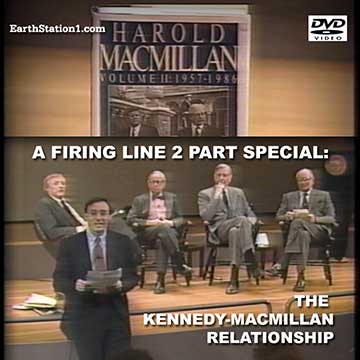
October 15, 1917: #BOTD: #HBD! Arthur M.
Schlesinger Jr., American historian, social critic, public
intellectual, presidential campaign advisor and speechwriter,
"court historian" of the Kennedy administration,
Pulitzer Prize recipient (d. February 28, 2007) is #born Arthur
Bancroft Schlesinger in Columbus, Ohio, and later changed his name
to Arthur Meier Schlesinger Jr., in honor of his influential
social historian father Arthur M. Schlesinger Sr., a Progressive
Era intellectual and specialist in American history who taught at
Ohio State University and Harvard University, pioneering social
history and urban history, himself the son of a Prussian Jew who
converted to Protestantism and then married an Austrian Catholic.
Much of Arthur M. Schlesinger Jr.'s work explored the history of
20th-century American liberalism. In particular, his work focused
on leaders such as Harry S. Truman, Franklin D. Roosevelt, John F.
Kennedy, and Robert F. Kennedy. In the 1952 and 1956 presidential
campaigns, he was a primary speechwriter and adviser to the
Democratic presidential nominee, Adlai Stevenson II. Schlesinger
served as special assistant and "court historian to President
Kennedy from 1961 to 1963. He wrote a detailed account of the
Kennedy administration, from the 1960 presidential campaign to the
president's state funeral, titled A Thousand Days: John F. Kennedy
in the White House, which won the 1966 Pulitzer Prize for
Biography or Autobiography. In 1968, Schlesinger actively
supported the presidential campaign of Senator Robert F. Kennedy,
which ended with Kennedy's assassination in Los Angeles.
Schlesinger wrote a popular biography, Robert Kennedy and His
Times, several years later. He later popularized the term
"imperial presidency" during the Nixon administration in
his 1973 book of the same name. Arthur M. Schlesinger Jr. died of
a heart attack suffered at Bobby Van's Steakhouse at 230 Park
Avenue in Manhattan, New York. He was taken to New York Downtown
Hospital, where he died at the age of 89. He is buried in Mount
Auburn Cemetery in Cambridge, Massachusetts. On Sale @ 15% Off
Discount Till Midnight PT!
https://store.earthstation1.com/firing-line-special-the-kennedymacmillan-relationship-dvd-mp4-usbht4.html
Today's
EarthStation1.com 15% Off Commemorative Memorial Title: China: The
Long March TV Field Expedition DVD, Download, USB Drive
Today, October 15, 2025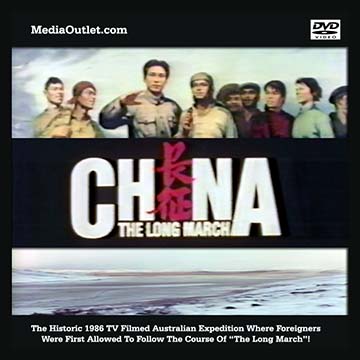
October 15-16, 1934: The Century Of
Humiliation (The Hundred Years Of National Humiliation)
(1838-1945): The Interwar Period (The Aftermath Of World War I,
The Interbellum, Between The Wars): The Chinese Civil War: The
Chinese Civil War First Phase (August 1, 1927 - December 26,
1936): The Long March (Chinese: The Long Expedition"): -- The
Long March begins as the Soviet Republic Of China collapses when
Chiang Kai-shek's National Revolutionary Army successfully
encircles Ruijin. The Jiangxi-Fujian Soviet (commonly called the
Jiangxi Soviet) was the largest component territory of the Chinese
Soviet Republic, an unrecognized state established in November
1931 by Mao Zedong and Zhu De during the Chinese civil war.
Geographically, the Jiangxi-Fujian Soviet occupied the mountainous
parts of Jiangxi and Fujian provinces of China and was home to the
town of Ruijin, the county seat and headquarters of the Chinese
Soviet government. The Jiangxi-Fujian base area was defended ably
by the First Red Front Army but in 1934 was finally overrun by the
Kuomintang government's National Revolutionary Army led by Chiang
Kai-shek in the Fifth of its Encirclement Campaigns. This last
campaign in 1934-35 precipitated the most famous of the grand
retreats known collectively as the Long March (October 1934:
October 1935), which was a military retreat undertaken by the Red
Army of the Communist Party of China, the forerunner of the
People's Liberation Army, to evade the pursuit of the Kuomintang
(KMT or Chinese Nationalist Party) army. There was not one Long
March, but a series of marches, as various Communist armies in the
south escaped to the north and west. The best known is the march
from Jiangxi province which began in October 1934. The First Front
Army of the Chinese Soviet Republic, led by an inexperienced
military commission, was on the brink of annihilation by
Generalissimo Chiang Kai-shek's troops in their stronghold in
Jiangxi province. The Communists, under the eventual command of
Mao Zedong and Zhou Enlai, escaped in a circling retreat to the
west and north, which reportedly traversed over 9,000 kilometers
(5600 miles) over 370 days. The route passed through some of the
most difficult terrain of western China by traveling west, then
north, to Shaanxi. The Long March began Mao Zedong's ascent to
power, whose leadership during the retreat gained him the support
of the members of the party. The bitter struggles of the Long
March, which was completed by only about one-tenth of the force
that left Jiangxi, would come to represent a significant episode
in the history of the Communist Party of China, and would seal the
personal prestige of Mao Zedong and his supporters as the new
leaders of the party in the following decades. On Sale @ 15% Off
Discount Till Midnight PT!
https://store.earthstation1.com/china-the-long-march-dvd-historic-1986-tv-expedi1986.html
Today's
EarthStation1.com 15% Off Commemorative Memorial Title: Charlie
Chaplin: The Little Tramp w/Joel Grey MP4 Video Download DVD
Today, October 15, 2025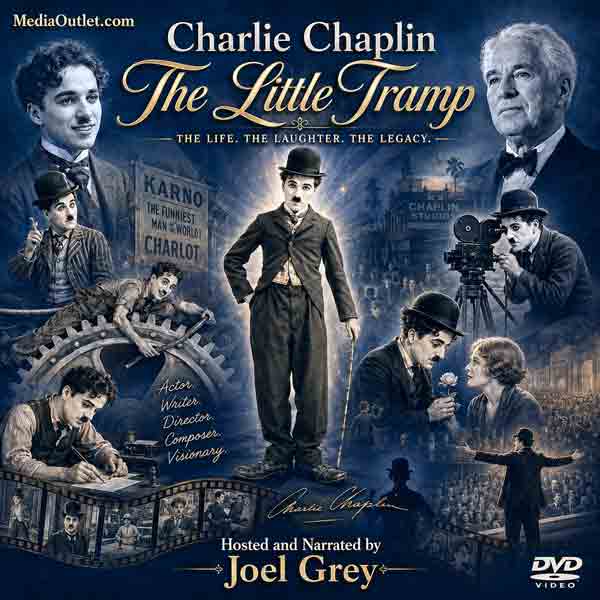
October 15, 1940: Aesthetics: Performing
Arts: Premieres: Film Premieres: American Film Premieres: -- The
Great Dictator, Charlie Chaplin's anti-war political satire black
comedy, a stirring condemnation of the German and Italian
dictators Adolf Hitler and Benito Mussolini, as well as fascism,
antisemitism, and the Nazis, is first released in New York City
and premieres simultaneously at the Capitol Theatre and the nearby
Astor Theatre. Charlie Chaplin was mobbed by fans at both
theaters, as Chaplin and his wife and costar Paulette Goddard made
appearances at both theaters. Released eleven years after the end
of the silent era, this was Sir Charles Chaplin's first
all-talking, all-sound film. This film was financed entirely by
Sir Charles Chaplin himself and it was his biggest box-office hit.
Adolf Hitler banned the film in Germany and in all countries
occupied by the Nazis. Curiosity however got the best of him and
he had a print brought in through Portugal. History records that
he screened it twice, in private, but not his reaction to the
film. Sir Charles Chaplin said, "I'd give anything to know
what he thought of it." For political reasons in Germany, the
ban stayed after the end of WWII until 1958. This great star of
the silent era closes the film with a speech considered by many
critics to be the best spoken words ever delivered on the screen.
On Sale @ 15% Off Discount Till Midnight PT!
https://store.earthstation1.com/charlie-chaplin-the-little-tramp-hosted-by-joel-grey-dvd.html
Today's
EarthStation1.com 15% Off Commemorative Memorial Title: The
Machine That Changed The World The Computer + Bonus 3 MP4s Or DVDs
Today, October 15, 2025
October 15, 1956: The Industrial
Revolution: The Third Industrial Revolution (1947-Present) (The
Information Age, The Computer Age, The Digital Age, The Digital
Electronics Revolution, The Silicon Age, The New Media Age, The
Media Age): The Computer: The History Of The Computer: Digital
Computers: The History Of Computer Programming: -- Fortran, the
first modern computer language, is shared with the coding
community for the first time. Fortran (derived from "Formula
Translation") is a general-purpose, imperative programming
language that is especially suited to numeric computation and
scientific computing. Originally developed by IBM in the 1950s for
scientific and engineering applications, Fortran came to dominate
this area of programming early on and has been in continuous use
for over half a century in computationally intensive areas such as
numerical weather prediction, finite element analysis,
computational fluid dynamics, computational physics,
crystallography and computational chemistry. It is a popular
language for high-performance computing and is used for programs
that benchmark and rank the world' fastest supercomputers. On Sale
@ 15% Off Discount Till Midnight PT!
https://store.earthstation1.com/the-machine-that-changed-the-world-the-computer-dvd-mp4-downloa4.html
Today's
EarthStation1.com 15% Off Commemorative Memorial Title: Spy
Machines Of The Cold War Documentaries MP4 Video Download DVD Set
Today, October 15, 2025
October 15, 1962: Cuba: The History Of
Cuba: The Aftermath Of World War II: The Cold War: The Cold War
(1962-1979): The Cuban Cold War: The Cuban Missile Crisis: -- The
CIA's National Photographic Interpretation Center (NPIC) reviews
the 928 U-2 photographs taken over the island of Cuba the day
prior and identifies Soviet medium range R-12 Dvina theatre
ballistic missiles (NATO reporting name: SS-4 Sandal) being
installed and erected at San Cristobal, Pinar del Rio Province
(now in Artemisa Province) in western Cuba. This identification
was made, in part, on the strength of reporting provided by Oleg
Penkovsky, a double agent in the GRU working for CIA and MI6.
Although he provided no direct reports of the Soviet missile
deployments to Cuba, technical and doctrinal details of Soviet
missile regiments that had been provided by Penkovsky in the
months and years prior to the Crisis helped NPIC analysts
correctly identify the missiles on U-2 imagery. The CIA then
notified the Department of State and at 8:30 pm EDT, Bundy chose
to wait until the next morning to tell the President. McNamara was
briefed at midnight. On Sale @ 15% Off Discount Till Midnight PT!
https://store.earthstation1.com/spy-machines-surveillance-and-intelligence-nova-documentary-dvd.html
Today's
EarthStation1.com 15% Off Commemorative Memorial Title: Vietnam:
The Ten Thousand Day War TV Series DVD, Video Download, USB
Today, October 15, 2025
October 15, 1965: The Aftermath Of World
War II: The Cold War: The Cold War In Asia: The Indochina Wars:
The Vietnam War (The Second Indochina War, The Vietnam Conflict,
The Resistance War Against America): The United States In The
Vietnam War: Opposition To United States Involvement In The
Vietnam War: Draft-card Burning: -- The Catholic Worker Movement
stages an anti-war rally in Manhattan in which David J. Miller
burns his draft card near the Armed Forces Induction Center on
Whitehall Street, the first such act to result in arrest under a
new amendment to the Selective Service Act. He spoke briefly to
the crowd from atop a sound truck and then tried but failed to
burn his card with matches - the wind kept blowing them out. A
lighter was offered by the crowd and it worked. Miller was
arrested by the FBI three days later in Manchester, New Hampshire,
while setting up peace literature on a table. The 24-year-old
pacifist, himself a member of the Catholic Worker Movement, became
the first man convicted under the 1965 amendment to the Selective
Service Act. In April 1966, with his wife and breast-feeding baby
in attendance, he was sentenced to 30 months in prison. The case
was argued in the United States Court of Appeals for the Second
Circuit in June. Miller's attorney held that "symbolic speech
is protected by the First Amendment; burning a draft card is a
most dramatic form of communication, and there is a constitutional
right to make one's speech as effective as possible." The
court did not agree. The case was decided later that year in
October: Miller's conviction was confirmed and his sentence
upheld. Loudon Wainwright Jr. wrote in Life magazine that Miller,
"without really knowing it, might be embarking on a lifelong
career of protest." Miller remained free on bail until June
1968, at which time he served 22 months in federal prison.
Draft-card burning was a symbol of protest performed by thousands
of young men in the United States and Australia in the 1960s and
early 1970s. The first draft-card burners were American men taking
part in the opposition to United States involvement in the Vietnam
War. The first well-publicized protest was in December 1963, with
a 22-year old conscientious objector, Gene Keyes, setting fire to
his card on Christmas Day in Champaign, Illinois. In May 1964, a
larger demonstration, with about 50 people in Union Square, New
York, was organized by the War Resisters League chaired by David
McReynolds. By May 1965 it was happening with greater frequency
around the US. To limit this kind of protest, in August 1965, the
United States Congress enacted a law to broaden draft card
violations to punish anyone who "knowingly destroys,
knowingly mutilates" his draft card. Subsequently, 46 men
were indicted for burning their draft cards at various rallies,
and four major court cases were heard. One of them, United States
v. O'Brien, was argued before the Supreme Court. The act of draft
card burning was defended as a symbolic form of free speech, a
constitutional right guaranteed by the First Amendment. The
Supreme Court decided against the draft card burners; it
determined that the federal law was justified and that it was
unrelated to the freedom of speech. In Australia following the
1966 troop increases directed by Prime Minister Harold Holt,
conscription notices were burned at mass demonstrations against
Australian involvement in Vietnam. In June 1968, the government
reacted by strengthening penalties for infractions of the Menzies
government 1964 National Service Act, including the burning of
registration cards. War protest ceased in 1972 when Australia's
new Labor government withdrew troops from Vietnam and abolished
conscription. From 1965 to 1973, very few men in the US were
convicted of burning their draft cards. Some 25,000 others went
unpunished. Before 1965, the act of burning a draft card was
already prohibited by US statute - the registrant was required to
carry the card at all times, and any destruction of it was thus
against the law. Also, it was entirely possible for a young man to
destroy his draft card and still answer his country's call to
service by appearing at an induction center and serving in the
military, and it was possible for a registrant to faithfully keep
his card on his person but fail to appear when called. The draft
card was not an essential part of the government's ability to
draft men into the military. Thus draft-card burning was an act of
war resistance more than it was draft resistance. The image of
draft card burning was a powerful one, influential in American
politics and culture. It appeared in magazines, newspapers and on
television, signaling a political divide between those who backed
the US government and its military goals and those who were
against any US involvement in Vietnam. Richard Nixon ran for
president in 1968 on a platform based partly on putting an end to
the draft, in order to undercut protesters making use of the
symbolic act. As president, Nixon ended the draft in 1973,
rendering unnecessary the symbolic act of draft-card burning. On
Sale @ 15% Off Discount Till Midnight PT!
https://store.earthstation1.com/vietnam-the-10000-day-war-4-dual-layer-dvds-all-13-10000413.html
Today's
EarthStation1.com 15% Off Commemorative Memorial Title: Conspiracy
The Trial Of The Chicago 8 + Yippie For Pigasus DVD MP4 USB
Today, October 15, 2025
October 15, 1969: The Aftermath Of World
War II: The Cold War: The Cold War In Asia: The Indochina Wars:
The Vietnam War (The Second Indochina War, The Vietnam Conflict,
The Resistance War Against America): The United States In The
Vietnam War: Opposition To United States Involvement In The
Vietnam War: The Moratorium To End The War In Vietnam: -- A
massive demonstration and teach-in, The Moratorium To End The War
In Vietnam, takes place across the United States against the
United States involvement in the Vietnam War. Over two million
demonstrate nationally; about 250,000 in Washington D.C.. It was
followed a month later, on November 15, 1969, by a large
Moratorium March in Washington, D.C.. Fred Halstead writes that it
was "the first time [the anti-war movement] reached the level
of a full-fledged mass movement." On Sale @ 15% Off Discount
Till Midnight PT!
https://store.earthstation1.com/conspiracy-the-trial-of-the-chicago-8-dvd-1987-tv-docu81987.html
Today's
EarthStation1.com 15% Off Commemorative Memorial Title: Gorbachev:
The Rise And Fall + Oleg Gordievsky Doc MP4 Download DVD
Today, October 15, 2025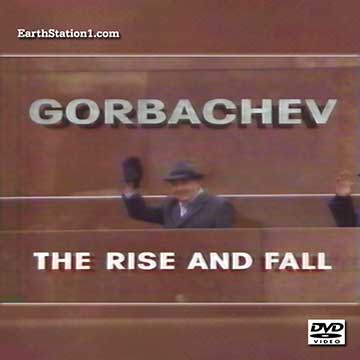
October 15, 1990: The Aftermath Of World
War II: The Cold War: The Cold War (1985-1991) (The End Of The
Cold War): The Dissolution Of The Soviet Union: The Nobel Prize:
The Nobel Peace Prize: The 1990 Nobel Peace Prize: -- Soviet Union
leader Mikhail Gorbachev is awarded the Nobel Peace Prize for his
efforts to lessen Cold War tensions and open up his nation, for
"his leading role in the peace process which today
characterizes important parts of the international community".
He was flattered but acknowledged "mixed feelings" about
the accolade. Polls indicated that 90% of Soviet citizens
disapproved of the award, which was widely seen as a Western and
anti-Soviet accolade. On Sale @ 15% Off Discount Till Midnight PT!
https://store.earthstation1.com/gorbachev-the-rise-and-fall-dvd-mp4-usb-flash-driv4.html
Today's
EarthStation1.com #OnThisDay Commemorative Memorial Title: Fibber
McGee And Molly Complete Radio Series MP3 DVD, Download, USB
Today, October 15, 2025 October 15: National Roast Pheasant Day
(UK): -- A day dedicated to roast pheasant. Also known as the
ring-necked pheasant or common pheasant, the pheasant is a native
Asian bird brought to Europe and the West during the 18th century.
It belongs to the Phasianidae family of birds. The pheasant is a
wild bird, and this holiday is dedicated to teaching people the
proper way to roast it. Pheasants have delicate, pinkish meat that
is mild in flavor, with a more distinct taste than chicken. The
pheasant is a wild bird from Asia but has been in Europe for quite
a long time. Evidence obtained from Roman archeology sites
suggests that the caucasian species of the pheasant bird was first
introduced to the British by the Romans as game birds, but there
is little evidence to back this claim. After the Romans left, the
bird became extinct for quite some time, as the first evidence of
pheasants in Britain came in 1059 when King Harold offered the
canons of Waltham Abbey a common pheasant instead of the usual
brace of partridge as a privilege of their office. Another record
of pheasants surfaced in 1089 when the monks of Rochester received
16 pheasants as gifts. Much later, the Normans made pheasants
popular as game birds in the 11th century. Gradually, the bird
moved from the U.K. to the U.S. The English Blackneck pheasants
were the first breed to be brought into North America by the
governors of New York and New Jersey in 1773. In 1789, George
Washington imported the American ruffed grouse, and in 1881, Owen
Nickerson Denny imported the Chinese ring-necked pheasants into
his native Oregon. From then on, new breeds started to appear. In
the U.K., pheasants are now one of the most common birds and can
be found almost everywhere. Though they became largely forgotten
and locally extinct, their popularity was revived in the 19th
century, and gamekeepers extensively reared them. The traditional
way to prepare pheasants is by roasting, hence the name National
Roast Pheasant Day instead of just National Pheasant Day.
https://store.earthstation1.com/fibber-mcgee-and-molly-mp3-dvd-complete-radio-serie3.html
October 15: National Roast Pheasant Day
(UK): -- A day dedicated to roast pheasant. Also known as the
ring-necked pheasant or common pheasant, the pheasant is a native
Asian bird brought to Europe and the West during the 18th century.
It belongs to the Phasianidae family of birds. The pheasant is a
wild bird, and this holiday is dedicated to teaching people the
proper way to roast it. Pheasants have delicate, pinkish meat that
is mild in flavor, with a more distinct taste than chicken. The
pheasant is a wild bird from Asia but has been in Europe for quite
a long time. Evidence obtained from Roman archeology sites
suggests that the caucasian species of the pheasant bird was first
introduced to the British by the Romans as game birds, but there
is little evidence to back this claim. After the Romans left, the
bird became extinct for quite some time, as the first evidence of
pheasants in Britain came in 1059 when King Harold offered the
canons of Waltham Abbey a common pheasant instead of the usual
brace of partridge as a privilege of their office. Another record
of pheasants surfaced in 1089 when the monks of Rochester received
16 pheasants as gifts. Much later, the Normans made pheasants
popular as game birds in the 11th century. Gradually, the bird
moved from the U.K. to the U.S. The English Blackneck pheasants
were the first breed to be brought into North America by the
governors of New York and New Jersey in 1773. In 1789, George
Washington imported the American ruffed grouse, and in 1881, Owen
Nickerson Denny imported the Chinese ring-necked pheasants into
his native Oregon. From then on, new breeds started to appear. In
the U.K., pheasants are now one of the most common birds and can
be found almost everywhere. Though they became largely forgotten
and locally extinct, their popularity was revived in the 19th
century, and gamekeepers extensively reared them. The traditional
way to prepare pheasants is by roasting, hence the name National
Roast Pheasant Day instead of just National Pheasant Day.
https://store.earthstation1.com/fibber-mcgee-and-molly-mp3-dvd-complete-radio-serie3.html
Today's
EarthStation1.com #OnThisDay Commemorative Memorial Title: Fibber
McGee And Molly Complete Radio Series MP3 DVD, Download, USB
Today, October 15, 2025October 15: National Mushroom Day: --
With more than 14,000 different species of mushrooms that grow
around the world, these delicious little fungi are a fantastic
source of nutrients and add a delicious umami flavor to any dish!
Not only do mushrooms offer a delicious flavor when eaten on their
own or added to various dishes, they are also one of the most
sustainably produced foods on the planet. So no one needs to feel
guilty about filling up on them! Plus, mushrooms are low in
calories and contain a wide variety of nutritious substances that
are part of a healthy and balanced diet for humans. So eat a lot
of mushrooms and eat them often! Originating in Australia,
National Mushroom Day is particularly meant for mushroom farmers,
restaurants, cafes and health professionals to enjoy and celebrate
everything related to growing and eating mushrooms. Now is the
best time to learn about mushrooms and eat mushrooms - a food that
is certainly worth celebrating! The celebration and enjoyment of
National Mushroom Day comes along with eating them and raising
awareness for the benefits to the people as well as to the earth.
In honor of National Mushroom Day, the first order of business is
to buy and eat some mushrooms! Add them to a salad, make them into
a creamy soup, saute them, put them on a burger, steam them in the
microwave, or stuff the caps of larger mushrooms. The options are
almost endless when it comes to different ways to prepare and
enjoy eating mushrooms! While they might look a bit bland,
mushrooms are chock full of healthy nutrients that can build into
an already balanced diet. Depending on the type of mushrooms, they
can bring a variety of different benefits to the diet, including
important minerals. Containing amounts of selenium, copper,
magnesium, phosphorus, zinc and thiamine, mushrooms offer a rich
source of healthy, necessary minerals for the diet. Mushrooms are
low in calories. Enjoying a handful of mushrooms is no problem,
even for those who are trying to count their calories. Of course,
it depends on the particular variety, but one cup of crimini
mushrooms contains only 15 calories, which is hardly even
noticeable in the grand scheme of things! Mushrooms are
anti-inflammatory. Because mushrooms have been shown to help the
body fight off inflammation, these little gems are believed to be
helpful in promoting a strong and effective immune system. In
fact, researchers have shown that, when people eat mushrooms,
microphages are stimulated which help reduce susceptibility to
various illnesses. Mushrooms can help lower the blood pressure. As
a source of potassium, mushrooms offer the capacity to keep the
cardiovascular system healthier. Potassium is known to reduce
blood vessel tension and therefore lower the blood pressure. Even
though mushrooms don't need light to grow and are very capable of
growing in the dark, they do produce Vitamin D when they are
exposed to ultraviolet light during the growing process. Because
they are grown indoors, mushrooms have a growing cycle that is
year-round. And because they are not affected by the weather,
mushrooms can be grown in all 50 of the United States as well as
all over the world. Some mushrooms can glow in the dark! At least
eighty different species of mushrooms are able to glow in the
dark, and some are so bright that they have earned the nickname
"electric mushrooms". Mushrooms can help people stay
young. With high amounts of certain types of antioxidants
(ergothioneine and glutathione), mushrooms fight off free radicals
and arm the body with the ability to reduce the occurrence of age
related diseases and illnesses, such as Alzheimer's disease.
https://store.earthstation1.com/fibber-mcgee-and-molly-mp3-dvd-complete-radio-serie3.html
Today's
EarthStation1.com #OnThisDay Commemorative Memorial Title:
Teenagers! Classic Youth Social Guidance Films DVD, MP4, USB Drive
Today, October 15, 2025October 15: World Students' Day: --
Commemorates the birthday of former Indian president Dr. A. P. J.
Abdul Kalam. Avul Pakir Jainulabdeen Abdul Kalam was born on
October 15, 1931, to a Muslim family in the pilgrimage center of
Rameswaram on Pamban Island, India. In a landslide victory, he
became the 11th president of the Republic of India on July 18,
2002. During his five-year tenure, Kalam was deeply loved by the
people and fondly called the "People's President." There
is controversy surrounding the origin of the holiday. Although
some sources claim it was established and is currently observed by
the United Nations (U.N.), there is no evidence pointing to that
fact. In reality, the only international day observed by the U.N.
on October 15 is the International Day of Rural Women.
Furthermore, it has been alleged that the National Information
Officer of the U.N. Information Center, Rajiv Chandran, stated
that the U.N. had never declared such a day. Nevertheless, World
Students' Day aims to recognize the impact Kalam had on India's
educational sector. Avul Pakir Jainulabdeen Abdul Kalam was born
on October 15, 1931, to a Tamil Muslim family in the pilgrimage
center of Rameswaram on Pamban Island, India. He graduated with a
physics degree from Saint Joseph's College, Tiruchirappalli. After
graduating from the Madras Institute of Technology, where he
studied aerospace engineering, he joined the Aeronautical
Development Establishment of the Defense Research and Development
Organization. He experienced a brilliant and illustrious career as
a scientist, becoming India's most famous nuclear scientist in the
1990s. Kalam became the 11th president of the Republic of India on
July 18, 2002. He was deeply loved and fondly called the "People's
President" during his five-year tenure. Post-presidency, he
lectured in several higher institutions. He was a visiting
professor at the Indian Institute of Management, Shillong; an
honorary fellow of the Indian Institute of Science, Bangalore; and
chancellor of the Indian Institute of Space Science and
Technology, as well as many other positions. Kalam received seven
honorary doctorates from 40 universities, indicating his
brilliance in his field. On July 27, 2015, while delivering a
lecture at the Indian Institute of Management, Shillong, he
suffered a cardiac arrest and passed away at Bethany Hospital.
https://store.earthstation1.com/teenagers-classic-youth-social-guidance-films-dvd-set-2-disc2.html
Today's
EarthStation1.com #OnThisDay Commemorative Memorial Title: Old
Time Kids Films Youth Social Guidance Films Set DVD, MP4, USB
Today, October 15, 2025October 15: Global Handwashing Day: --
Handwashing is a regular practice that you should do every day,
but today we put just a little more thought to it. Until COVID-19
happened, handwashing and its importance in helping prevent the
spread of diseases is something that most of us probably never
gave much thought to. But the global pandemic has really shone a
light on the importance of handwashing, meaning this day now
carries extra relevance, even though it has been around since
2008. Global Handwashing Day was founded by the Global Handwashing
Partnership as an opportunity to design and implement creative
ways to encourage people to wash their hands with soap, especially
during critical times. The first Global Handwashing Day was held
in 2008. Since then, the community as well as national leaders and
influencers have used this national holiday to spread awareness
about the value of clean hands. It really is a valuable message,
hand washing is such a simple practice, but it really can make all
the difference and save lives. Global Handwashing Day continues to
grow. It's endorsed by schools, governments, international
institutions, private companies, civil society organizations, and
more.
https://store.earthstation1.com/old-time-kids-films-youth-social-guidance-films-dual-layer-dvd.html
Today's
EarthStation1.com #OnThisDay Commemorative Memorial Title: Helen
Keller: In Her Story + Bonus Biography DVD, Download, USB Drive
Today, October 15, 2025October 15: White Cane Safety Day: --
Today is dedicated to visually impaired people. The white cane
represents their remarkable achievements and symbolizes their
independence. Traveling aids for the blind like canes, staff, and
sticks have been around for a long time, but it was only in the
20th century that white canes came into existence and became a
symbol used by the blind to alert others. It is said that James
Biggs, a photographer from Bristol, was the one who came up with
the concept of white canes. In 1921, Biggs met with an accident,
which resulted in blindness. The number of vehicles on the roads
was rising during that period, so Biggs decided to paint his cane
white in order to be easily visible to motorists, as well as other
pedestrians. In France, musician and writer Guilly d'Herbemont
launched a scheme for the blind named the National White Stick
Movement. She handed over white canes to many blind people
throughout France, including WWI veterans. This was well-received
in the United Kingdom as well. The United Kingdom proposed that
blind people be given white canes and that it be universally
recognized as an indicator that the person carrying it was blind.
In the United States, it was the Lions Clubs International that
suggested the idea of giving white canes to the blind. For the war
veterans, the long white canes not only acted as an identifier but
also as a tool used for mobility. On October 6, 1964, President
Lyndon B. Johnson and the U.S. Congress signed a joint resolution
and proclaimed that October 15 be celebrated as White Cane Safety
Day every year.
https://store.earthstation1.com/helen-keller-in-her-story-dvd-plus-bonus-biography.html
Today's
EarthStation1.com #OnThisDay Commemorative Memorial Title: Songs
Of Protest And Conscience Played In The USA DVD, MP4, USB Drive
Today, October 15, 2025October 15: Shine A Light Night: -- A day
in Ireland when people spend the night away from the safety and
comfort of their beds. People sleep outside their homes to raise
awareness and funds for the welfare of homeless people. Focus
Ireland introduced this day in 2012 and has helped raise over
7.69M USD for homeless people in Ireland. According to a
Department of Housing Today report published in "Thejournal.ie,"
there were more than 8,200 homeless people in Ireland as of
December 2020, and the figure is rising. Participate in the
campaign to support this noble cause. Housing is a basic human
necessity and has been around for a long time. Over 70,000 years
ago, caves were used as shelters. In every way, housing has
transformed. We have advanced from caves, huts, Roman buildings
with slanted roofs, timber houses, and so on, to modern living
spaces. Houses are no longer just shelters from the outdoors and
animals but we have a place in the house where we belong. One's
house is also a status symbol and a personal identity.
Urbanization, the evolution of the nuclear family, and cultural
factors have contributed to the desire to own a house. Around 150
million people all over the world are homeless, and this figure is
rising every year. A 2015 survey states that around 1.6 billion
people live in inadequate shelters. With more than 8,000 homeless
people, Ireland is facing a housing crisis too. More than 5,000
adults and 2,300 children need assistance to have a roof over
their heads. Focus Ireland is trying to improve the dire
situation. Focus Ireland was founded by Sr. Stanislaus Kennedy in
1980. The organization was formed to address the need to create
safe dwellings for people and is supported by the business
community of Ireland. It provides help and information to the
homeless and also ensures that the rights of these people remain
on the government agenda. 'Shine a Light Night' is an initiative
of Focus Ireland. The campaign encourages business leaders,
students, and the general public across Ireland to experience one
night of sleeping outdoors.
https://store.earthstation1.com/songs-of-protest-and-conscience-played-in-the-usa-dvd-mp4-us4.html
Today's
EarthStation1.com #OnThisDay Commemorative Memorial Title: The
Dancing Man: Peg Leg Bates DVD, MP4 Video Download, Flash Drive
Today, October 15, 2025October 15: National Dance/Movement
Therapy Advocacy Day: -- What fun it is to dance and spread
awareness on National Dance/Movement Therapy Advocacy Day! Held
every October 15th, this special day shines a light on the
benefits of dance therapy. It's a day to bring joy and share the
uplifting effects the movement has on mental health. People
celebrate this day by coming together to promote dance therapy and
its positive impact on well-being. Dance therapy is more than just
moving to the beat; it's about using movement to express emotions
and improve overall health. Therapists and advocates emphasize how
dance can help with stress, anxiety, and trauma. It's a unique way
to process emotions and find healing through movement, something
words can't always provide. The day also aims to show how this
practice can enhance mental clarity and emotional balance. By
spreading the word about dance therapy, advocates hope to make it
more widely recognized and accessible. Events include workshops,
discussions, and demonstrations to showcase the transformative
power of dance. People share personal stories and evidence of its
effectiveness to highlight its value in healthcare. The ultimate
goal is to ensure dance therapy is seen as a valuable tool for
improving lives. National Dance/Movement Therapy Advocacy Day has
a rich history rooted in the benefits of movement for mental
health. It began as an initiative by the American Dance Therapy
Association (ADTA) to raise awareness of dance therapy's positive
impact. The ADTA recognized the need for a special day to
highlight the importance of this therapeutic approach and educate
the public about its benefits. Dance therapy began gaining
popularity in the mid-20th century. Mental health professionals
noticed how movement could help patients express themselves in
ways words could not. Over the years, research supported its
effectiveness, leading to its inclusion in various therapeutic
settings. This paved the way for creating a day that honors the
profession and its contributions. Advocates believed a day
dedicated to dance therapy would help increase its recognition.
They wanted to show its potential to improve mental health and
emotional well-being. By promoting this unique form of therapy,
they aimed to integrate it into healthcare more broadly. National
Dance/Movement Therapy Advocacy Day serves as a platform for
professionals and supporters to showcase the benefits of this
practice. The day encourages collaboration between therapists,
patients, and the community to spread awareness. It highlights the
importance of movement for mental health and celebrates the
progress the field has made. The hope is that with continued
advocacy, dance therapy will gain more recognition and acceptance
in healthcare. The history of this day reflects the growing
understanding of movement as a valuable tool for emotional
healing.
https://store.earthstation1.com/the-dancing-man-peg-leg-bates-dvd.html
Today's
EarthStation1.com #OnThisDay Commemorative Memorial Title: History
Of Talk Radio w/Lauren Hutton + Dateline: Howard Stern MP4 DVD
Today, October 15, 2025( #JCKaelin here: The inspiration for the
Oscar The Grouch character of Sesame Street, the character who
inspired the creation of National Grouch Day, was Oscar Brand, who
I corresponded with regularly by email during the final years of
his life; the last email I got from him was 4 days before his
death. Because of some mild disagreements that had occurred
between Brand and the board members of The Children's Television
Workshop (CTW), who produced Sesame Street, regarding the
appropriate setting for the show, they made a playful joke out of
their disagreements by creating the Oscar The Grouch character.
Oscar Brand was in fact a very nice guy! He always answered all my
emails within a couple days of my sending them. He's the reason I
came to love folk music, due to his Folk Song Festival show, which
I listened virtually to every Saturday night on WNYC-AM radio in
New York City. It took some time to get used to not hearing his
show; I don't know if I ever got over it. God Bless You & Keep
You, Oscar Brand!) ========= October 15: National Grouch Day: --
To honor the world's favorite grouch, Oscar, from "Sesame
Street," National Grouch Day was created on October 15. This
is a day to celebrate all the grouches we know - or to embrace the
grouch that lives inside all of us. On this day no one can stop us
from complaining, being irritable, or wallowing in misery. Because
that is what grouches do! Also, this day teaches us that it's good
to spend time processing our negative emotions. Beginning in 1969,
Oscar the Grouch joined the cast of Sesame Street in delighting
American children through the Children's Television Network (CTN)
and the Public Broadcasting Service (PBS). Always acting a bit
grumpy and complaining a lot, Oscar's name reveals his character.
However, as time passed on Sesame Street, a softer side of this
fuzzy green puppet was also revealed, even though he continued to
live in a garbage can and sing about how much he truly loved
trash. The origins of National Grouch Day are not specifically
connected to Oscar the Grouch or Sesame Street, however. In fact,
the day seems to have been created in 1976 when Bill and Helen
Chase, of Chase's Calendar of Events, were inspired by their
granddaughter, Monica. In sixth grade in Michigan at the time,
Monica had a particularly grouchy teacher whose birthday was on
October 15. So, as a practical joke, Monica and her friends dubbed
this date as National Grouch Day - and the idea has stuck ever
since. As National Grouch Day grew in popularity, Sesame Street
was appreciative of the idea and began to connect with it. And
now, the day is delightfully celebrated by people all over the
world whether in relation to Oscar the Grouch or simply poking fun
at those people in their lives who are a little bit on the grumpy
side. So get ready to celebrate National Grouch Day -- but be sure
not to enjoy it too much - always remember to be grouchy about it
instead! ;) https://store.earthstation1.com/hioftarawila.html
Today's
EarthStation1.com #OnThisDay Commemorative Memorial Title: The
Goon Show British Radio Comedy Series MP3 DVD, Download, USB Drive
Today, October 15, 2025October 15, 1851: Grand Finales: World's
Fairs: The Great Exhibition Of The Works Of Industry Of All
Nations (The Great Exhibition, The Crystal Palace Exhibition): --
The first world's fair, The Great Exhibition Of The Works Of
Industry Of All Nations, also known as The Great Exhibition, The
Crystal Palace Exhibition, an international exhibition that took
place in Hyde Park, London, concludes, having opened May 1 that
year. It was the first in a series of world's fairs, exhibitions
of culture and industry that became popular in the 19th century.
The event was organised by Henry Cole and Prince Albert, husband
of Victoria, Queen of the United Kingdom. More than 14,000
exhibitors from around the world gathered in its
990,000-square-foot (92,000 m2) exhibition space to display
examples of technology developed in the Industrial Revolution.
Organised by Howard Staunton, the first international chess
tournament took place at the Exhibition. The world's first soft
drink, Schweppes, was the official sponsor of the event. Famous
people of the time attended the Great Exhibition, including
Charles Darwin, Karl Marx, Michael Faraday (who assisted with the
planning and judging of exhibits), Samuel Colt, members of the
Orleanist royal family and the writers Charlotte Bronte, Charles
Dickens, Lewis Carroll, George Eliot, Alfred Tennyson, and William
Makepeace Thackeray. The future Arts and Crafts proponent William
Morris, then a teenager, later said he refused to attend the
Exhibition on the grounds of taste. The opening music, under the
superintendence of William Sterndale Bennett, was directed by
George Thomas Smart. After it was moved to the top of Penge Peak
next to Sydenham Hill, an affluent suburb of large villas, at the
end of the exhibition in June 1854, it remained there until its
destruction by fire in November 1936. The nearby residential area
was renamed Crystal Palace after the landmark. This included the
Crystal Palace Park that surrounds the site, home of the Crystal
Palace National Sports Centre, which was previously a football
stadium that hosted the FA Cup Final between 1895 and 1914.
Crystal Palace F.C. were founded at the site and played at the Cup
Final venue in their early years. The park still contains Benjamin
Waterhouse Hawkins's Crystal Palace Dinosaurs which date back to
1854. On November 30, 1936, The Crystal Palace, a cast iron and
plate glass structure originally built as a temporary structure in
Hyde Park, London to house The Great Exhibition Of 1851, the first
World's Fair, and then later relocated to an open area of South
London known as Penge Place, one of the great wonders of the age,
is destroyed by fire. That evening, Sir Henry Buckland, manager of
the Crystal Palace board of trustees, was walking his dog near the
Palace with his daughter Crystal, named after the building, when
they noticed a red glow within it. When Buckland went inside, he
found two of his employees fighting a small office fire that had
started after an explosion in the women's cloakroom. Realising
that it was a serious fire, they called the Penge fire brigade.
Although 89 fire engines and over 400 firemen arrived, they were
unable to extinguish it. Within hours, the Palace was destroyed:
the glow was visible across eight counties. The fire spread
quickly in the high winds that night, in part because of the dry
old timber flooring, and the huge quantity of flammable materials
in the building. Buckland said, "In a few hours we have seen
the end of the Crystal Palace. Yet it will live in the memories
not only of Englishmen, but the whole world". One-hundred
thousand people came to Sydenham Hill to watch the blaze, among
them Winston Churchill, who said, "This is the end of an
age". Just as in 1866, when the north transept burnt down,
the building was not adequately insured to cover the cost of
rebuilding (at least 2M PS). The South Tower and much of the lower
level of the Palace had been used for tests by television pioneer
John Logie Baird for his mechanical television experiments, and
much of his work was destroyed in the fire. Baird is reported to
have suspected the fire was a deliberate act of sabotage against
his work on developing television, but the true cause remains
unknown. The last singer to perform there before the fire was the
Australian ballad contralto Essie Ackland. All that was left
standing after the fire were the two water towers and a section of
the north end of the main nave which was too badly damaged to be
saved. The south tower to the right of the Crystal Palace entrance
was taken down shortly after the fire, as the damage sustained had
undermined its integrity and presented a major risk to houses
nearby. Thos. W. Ward Ltd., Sheffield, dismantled the Crystal
Palace. The north tower was demolished with explosives in 1941. No
reason was given for its removal; it was rumoured that it was to
remove a landmark for German aircraft in the Second World War. In
fact Luftwaffe bombers actually navigated their way to central
London by tracking the Thames. The Crystal Palace grounds were
used as a manufacturing base for aircraft radar screens and other
hi-tech equipment of the time. This remained a secret until well
after the war. The Crystal Palace transmitting station was built
on the former aquarium site in the mid-1950s and still serves as
one of London's main television transmission masts. In northern
corner of the park is the Crystal Palace Bowl, a natural
amphitheatre where large-scale open-air summer concerts have been
held since the 1960s. These have ranged from classical and
orchestral music, to rock, pop, blues and reggae. Pink Floyd, Bob
Marley, Elton John, Eric Clapton, and The Beach Boys played the
Bowl during its heyday. The stage was rebuilt in 1997 with an
award-winning permanent structure designed by Ian Ritchie. The
Bowl has been inactive as a music venue for several years, and the
stage has fallen into a state of disrepair, but as of March 2020
London Borough of Bromley Council are working with a local action
group to find "creative and community-minded business
proposals to reactivate the cherished concert platform". In
2020 the base and foundation of the south tower were given
historic status.[77] They are located near the Crystal Palace
Museum on Anerley Hill, which is dedicated to the history of the
building. The Crystal Palace boasted the greatest area of glass
ever seen in a building; its 293,000 panes of glass, manufactured
by the Chance Brothers, astonished visitors with its clear walls
and ceilings that did not require interior lights. It has been
suggested that the name of the building resulted from a piece
penned by the playwright Douglas Jerrold, who in July 1850 wrote
in the satirical magazine Punch about the forthcoming Great
Exhibition, referring to a "palace of very crystal".
Designed by Joseph Paxton, the Great Exhibition building was 1,851
feet (564 m) long, with an interior height of 128 feet (39 m), and
was three times the size of St Paul's Cathedral. The
990,000-square-foot building with its 128-foot-high ceiling was
completed in thirty-nine weeks.
https://store.earthstation1.com/the-goon-show-otr-mp3-dvd-spike-milligan-peter-sellers-secomb3.html
Today's
EarthStation1.com #OnThisDay Commemorative Memorial Title:
Edison's Miracle Of Light History Peter Coyote MP4 Video Download
DVD
Today, October 15, 2025October 15, 1878: Lighting
(Illumination): The History Of Lighting: Electric Light: The
History Of Electric Light: Incandescent Lighting: The History Of
Incandescent Lighting: -- The Edison Electric Light Company begins
operation. It was the patent-holding company and the financial arm
backed by J.P. Morgan and the Vanderbilt family for Edison's
lighting experiments, and its holdings included Edison Lamp
Company, a lamp manufacturer in East Newark, New Jersey; Bergmann
and Company, a manufacturer of electric lighting fixtures,
sockets, and other electric lighting devices; and Edison Machine
Works, a manufacturer of dynamos and large electric motors in
Schenectady, New York.
https://store.earthstation1.com/edmioflihipe.html
Today's
EarthStation1.com #OnThisDay Commemorative Memorial Title: US
Fleet Submarines Of The Pacific War MP4 Video Download DVD
Today, October 15, 2025October 15, 1943: Naval History: The
History Of The United States Navy: The New United States Navy (The
New Navy, The United States Navy 1885-Present): Naval Commissions:
Submarines (Subs): USS Tang (SS-306): -- USS Tang (SS-306), a
Balao-class submarine of The Second World War, considered one of
the greatest submarines of all time, the first ship of the United
States Navy to bear the name Tang, is commissioned with Lieutenant
Commander Richard O'Kane, former executive officer of the USS
Wahoo (SS-238), in command. She would be delivered to the Navy on
November 30, 1943. The contract to build USS Tang was awarded to
Mare Island Naval Shipyard in Vallejo, California northeast of San
Francisco on December 15, 1941, and her keel was laid down on
January 15, 1943. She was launched on August 17 sponsored by Mrs.
Alix M. Pitre, wife of Captain Antonio S. Pitre, Director of
Research at the Mare Island Naval Shipyard. In her short career in
the Pacific War, USS Tang sank 33 ships totalling 116,454 tons.
Tang served until being sunk during her final engagement by a
circular run of her final torpedo off the coast of China in the
Taiwan Strait on October 24, 1944, going down in 180 ft (55 m) of
water. 78 men were lost, and the 9 survivors were picked up by a
Japanese frigate and taken prisoner of war. This was the only
known time that a Momsen lung was used to escape a sunken
submarine. Commander Richard O'Kane received the Medal of Honor
for her last two engagements (October 23 and 24, 1944). The Balao
Class Submarine was a design of United States Navy submarine used
during World War II, and with 120 boats completed, the largest
class of submarines in the United States Navy. It was an
improvement on the earlier Gato Class, though the boats had slight
internal differences; both classes were considered to be the best
long range submarines of World War II. The most significant
improvement of the Balao Class was the use of thicker, higher
yield strength steel in the pressure hull skins and frames, which
increased their test depth to 400 feet (120 m). USS Tang actually
achieved a depth of 612 ft (187 m) during a test dive, and
exceeded that test depth when taking on water in the forward
torpedo room while evading a destroyer.
https://store.earthstation1.com/us-fleet-submarines-of-the-pacific-war-mp4-video-download-dvd.html
Today's
EarthStation1.com #OnThisDay Commemorative Memorial Title:
American Revolutionary War Documentaries DVD, Download, USB Drive
Today, October 15, 2025October 15, 1817: #DOTD: #RIP: Thaddeus
Kosciusko (Tadeusz Kosciuszko; Belarusian: Andrzej Tadeusz
Bonawentura Kosciuszko, English: English: Andrew Thaddeus
Bonaventure Kosciuszko), Polish military engineer, statesman, and
military leader who became a national hero in Belarus, France,
Lithuania, Poland and the United States (d. February 4, 1746)
#dies in Solothurn, Switzerland at age 71 after falling from a
horse, developing a fever, and suffering a stroke a few days
later. Kosciuszko had two funerals; the first was held on October
19, 1817 at a formerly Jesuit church in Solothurn. As news of his
death spread, masses and memorial services were held in
partitioned Poland. His embalmed body was deposited in a crypt of
the Solothurn church. In 1818, Kosciuszko's body was transferred
to Krakow, arriving at St. Florian's Church on April 11, 1818. On
June 22, 1818, or June 23, 1819 (accounts vary), it was placed in
a crypt at Wawel Cathedral, a pantheon of Polish kings and
national heroes, to the tolling of the Sigismund Bell and the
firing of cannon. Kosciuszko's internal organs, which had been
removed during embalming, were separately interred in a graveyard
at Zuchwil, near Solothurn. Kosciuszko's organs remain there to
this day; a large memorial stone was erected in 1820, next to a
Polish memorial chapel. However, his heart was not interred with
the other organs but instead kept in an urn at the Polish Museum
in Rapperswil, Switzerland. The heart, along with the rest of the
Museum's holdings, were repatriated back to Warsaw in 1927, where
the heart now reposes in a chapel at the Royal Castle. Thaddeus
Kosciusko was born Andrzej Tadeusz Bonawentura Kosciuszko in a
manor house on the Mereczowszczyzna estate in Brest Litovsk
Voivodeship near Kosow in Nowogrodek Voivodeship, Grand Duchy of
Lithuania, a part of the Polish-Lithuanian Commonwealth (now
Ivatsevichy District of Belarus). His exact birthdate is
uncertain; commonly cited are February 4 and February 12. He
fought in the Polish-Lithuanian Commonwealth's struggles against
Russia and Prussia, and on the US side in the American
Revolutionary War. As Supreme Commander of the Polish National
Armed Forces, he led the 1794 Kosciuszko Uprising, also known as
the Polish Uprising of 1794 and the Second Polish War, an uprising
against the Russian Empire and the Kingdom of Prussia in the
Polish-Lithuanian Commonwealth and the Prussian partition in 1794.
It was a failed attempt to liberate the Polish-Lithuanian
Commonwealth from external influence after the Second Partition of
Poland (1793) and the creation of the Targowica Confederation. At
age 20, he graduated from the Corps of Cadets in Warsaw, Poland.
After the start of the civil war in 1768, Kosciuszko moved to
France in 1769 to study. He returned to the Commonwealth in 1774,
two years after the First Partition, and was a tutor in the
household of Jozef Sylwester Sosnowski, Polish-Lithuanian magnate
and Voivode of Smolensk. Sosnowski is best remembered as the
father of a love interest of Tadeusz Kosciuszko's, Ludwika
Sosnowska. Sosnowski refused him his daughter's hand, reputedly
telling the future hero of multiple conflicts that "turtledoves
are not for common sparrows, and magnates' daughters are not for
petty nobility." (After he returned to Poland from America
and sought a Polish Army commission, Ludwika Sosnowska, who had
become the Princess Lubomirska after she had been forced by her
father to marry into the higher nobility, urged the King to offer
Kosciuszko a commission. When he went to Warsaw in summer 1789 to
pursue the matter, he encountered her at a ball. As his friend
Julian Ursyn Niemcewicz later recounted, "The meeting was so
emotional [for both] that they were unable to speak to each other;
each moved away to a different corner of the salon and wept.")
In 1776, Kosciuszko moved to North America, where he took part in
the American Revolutionary War as a colonel in the Continental
Army. An accomplished military architect, he designed and oversaw
the construction of state-of-the-art fortifications, including
those at West Point, New York. In 1783, in recognition of his
services, the Continental Congress promoted him to brigadier
general. Upon returning to Poland in 1784, Kosciuszko was
commissioned as a major general in the Polish-Lithuanian
Commonwealth Army in 1789. After the Polish-Russian War of 1792
resulted in the Commonwealth's Second Partition, he commanded an
uprising against the Russian Empire in March 1794 until he was
captured at the Battle of Maciejowice in October 1794. The defeat
of the Kosciuszko Uprising that November led to Poland's Third
Partition in 1795, which ended the Commonwealth. In 1796,
following the death of Tsaritsa Catherine II, Kosciuszko was
pardoned by her successor, Tsar Paul I, and he emigrated to the
United States. A close friend of Thomas Jefferson, with whom he
shared ideals of human rights, Kosciuszko wrote a will in 1798,
dedicating his U.S. assets to the education and freedom of the
U.S. slaves. Kosciuszko eventually returned to Europe and lived in
Switzerland until his death in 1817. The execution of his
testament later proved difficult, and the funds were never used
for the purpose Kosciuszko intended.
https://store.earthstation1.com/american-revolutionary-war-dvd-documentaries.html
Today's
EarthStation1.com #OnThisDay Commemorative Memorial Title: Sold
Down The River: Black Freedom Lost After Civil War DVD, MP4, USB
Today, October 15, 2025October 15, 1883: The Reconstruction Era
(Reconstruction): The Reconstruction Amendments: The Nadir Of
American Race Relations (1877/1890 - 1901/1923/1941 [Dates
Disputed]): The Civil Rights Act Of 1875: -- The U.S. Supreme
Court declared The Civil Rights Act Of 1875 unconstitutional,
ruling that while the Equal Protection Clause within the
Fourteenth Amendment prohibits discrimination by the state and
local government, it does not give the federal government the
power to prohibit discrimination by private individuals and
organizations. The Court also held that the Thirteenth Amendment
was meant to eliminate "the badge of slavery," but not
to prohibit racial discrimination in public accommodations. The
Civil Rights Act of 1875 was the last federal civil rights bill
signed into law until the Civil Rights Act of 1957, enacted during
the Civil Rights Movement Parts of the Civil Rights Act of 1875
were later re-adopted in the Civil Rights Act of 1964 and the
Civil Rights Act of 1968, both of which cited the Commerce Clause
as the source of Congress's power to regulate private actors.
https://store.earthstation1.com/sold-down-the-river-black-liberty39s-loss-after-civil-war-dvd-mp4-394.html
Today's
EarthStation1.com #OnThisDay Commemorative Memorial Title: The
FBI's War On Black America: COINTELPRO MP4 Video Download DVD
Today, October 15, 2025October 15, 1966: Civil Rights Movements:
The American Civil Rights Movement (1954-1968): Black Power: The
Black Power Movement (The Black Liberation Movement): The
Counterculture Of The 1960s: The Black Panther Party (The Black
Panther Party For Self-Defense): -- The Black Panther Party, a
Marxist-Leninist and black power political organization, is
founded in Oakland, California by African American college
students Bobby Seale and Huey P. Newton. The party was active in
the United States between 1966 and 1982, with chapters in many
major American cities, including San Francisco, New York, Chicago,
Los Angeles, Seattle, and Philadelphia. They were also active in
many prisons and had international chapters in the United Kingdom
and Algeria. Upon its inception, the party's core practice was its
open carry patrols ("copwatching") designed to challenge
the excessive force and misconduct of the Oakland Police
Department. From 1969 onward, the party created social programs,
including the Free Breakfast For Children Programs, education
programs, and community health clinics. The Black Panther Party
advocated for class struggle, claiming to represent the
proletarian vanguard. In 1969, J. Edgar Hoover, the Director of
the Federal Bureau of Investigation (FBI), described the party as
"the greatest threat to the internal security of the
country." The FBI sabotaged the party with an illegal and
covert counterintelligence program (COINTELPRO) of surveillance,
infiltration, perjury, police harassment, all designed to
undermine and criminalize the party. The FBI was involved in the
1969 assassinations of Fred Hampton, and Mark Clark, who were
killed in a raid by the Chicago Police Department. Black Panther
Party members were involved in many fatal firefights with police.
Huey Newton allegedly killed officer John Frey in 1967, and
Eldridge Cleaver (Minister of Information) led an ambush in 1968
of Oakland police officers, in which two officers were wounded and
Panther treasurer Bobby Hutton was killed. The party suffered many
internal conflicts, resulting in the murders of Alex Rackley and
Betty Van Patter. Government persecution initially contributed to
the party's growth among African Americans and the political left,
who both valued the party as a powerful force against de facto
segregation and the US military draft during the Vietnam War.
Party membership peaked in 1970 and gradually declined over the
next decade, due to vilification by the mainstream press and
infighting largely fomented by COINTELPRO. Support further
declined over reports of the party's alleged criminal activities,
such as drug dealing and extortion. The party's history is
controversial. Scholars have characterized the Black Panther Party
as the most influential black power organization of the late
1960s, and "the strongest link between the domestic Black
Liberation Struggle and global opponents of American imperialism".
Other scholars have cited instances of the party acting as more
criminal than political and appearing to act with "defiant
posturing over substance".nal Trophy in 1954. The X-1 he flew
that day was later put on permanent display at the Smithsonian
Institution's National Air and Space Museum.
https://store.earthstation1.com/the-fbis-war-on-black-america-cointelpro-mp4-video-download-dvd.html
Today's
EarthStation1.com #OnThisDay Commemorative Memorial Title: School
Segregation: Little Rock & Boston MP4 Video Download DVD
Today, October 15, 2025October 15, 1974: Civil Rights Movements:
The American Civil Rights Movement (1954-1968): School
Desegregation: The Desegregation Of Boston Public Schools
(1974-1988): Desegregation Busing (Busing, Race-Integration
busing, Integrated Busing): The Boston Desegregation Busing Crisis
(1974-1988): -- A while student is stabbed by a black student at
Hyde Park High School, leading to a riot that injures 8 and
results in Governor Francis W. Sargent mobilizing the
Massachusetts National Guard to restore order in Boston. The
Desegregation Of Boston Public Schools (1974-1988) was a period in
which the Boston Public Schools were under court control to
desegregate through a system of busing students. The call for
desegregation and the first years of its implementation led to a
series of racial protests and riots that brought national
attention, particularly from 1974 to 1976. In response to the
Massachusetts legislature's enactment of the 1965 Racial Imbalance
Act, which ordered the state's public schools to desegregate, W.
Arthur Garrity Jr. of the United States District Court for the
District of Massachusetts laid out a plan for compulsory busing of
students between predominantly white and black areas of the city.
The hard control of the desegregation plan lasted for over a
decade. It influenced Boston politics and contributed to
demographic shifts of Boston's school-age population, leading to a
decline of public-school enrollment and white flight to the
suburbs. Full control of the desegregation plan was transferred to
the Boston School Committee in 1988; in 2013 the busing system was
replaced by one with dramatically reduced busing.
https://store.earthstation1.com/school-segregation-little-rock-amp-boston-mp4-video-download-dv4.html
Today's
EarthStation1.com #OnThisDay Commemorative Memorial Title: You're
The Top: The Cole Porter Story DVD, MP4 Download, USB Drive
Today, October 15, 2025October 15, 1964: #DOTD: #RIP: Cole
Porter, American composer and songwriter (b. June 9, 1893) #dies
of kidney failure in Santa Monica, California, at the age of 73.
He is interred in Mount Hope Cemetery in his native Peru, Indiana,
between his wife and father. Cole Porter was born Cole Albert
Porter to a wealthy family in Peru, Indiana. Many of his songs
became standards noted for their witty, urbane lyrics, and many of
his scores found success on Broadway and in film. He published his
first song The Bobolink Waltz at the age of ten. Porter defied his
grandfather's wishes and took up music as a profession.
Classically trained, he was drawn to musical theatre. After a slow
start, he began to achieve success in the 1920s, and by the 1930s
he was one of the major songwriters for the Broadway musical
stage. Unlike many successful Broadway composers, Porter wrote the
lyrics as well as the music for his songs. After a serious
horseback riding accident in 1937, Porter was left disabled and in
constant pain, but he continued to work. His shows of the early
1940s did not contain the lasting hits of his best work of the
1920s and 1930s, but in 1948 he made a triumphant comeback with
his most successful musical, Kiss Me, Kate. It won the first Tony
Award for Best Musical. Porter's other musicals include Fifty
Million Frenchmen, DuBarry Was a Lady, Anything Goes, Can-Can and
Silk Stockings. His numerous hit songs include "Night and
Day", "Begin the Beguine", "I Get a Kick Out
of You", "Well, Did You Evah!", "I've Got You
Under My Skin", "My Heart Belongs to Daddy" and
"You're the Top". He also composed scores for films from
the 1930s to the 1950s, including Born to Dance (1936), which
featured the song "You'd Be So Easy to Love"; Rosalie
(1937), which featured "In the Still of the Night"; High
Society (1956), which included "True Love"; and Les
Girls (1957).
https://store.earthstation1.com/you39re-the-top-the-cole-porter-story-dvd-mp4-download-usb-dr394.html
Today's
EarthStation1.com #OnThisDay Commemorative Memorial Title: DJ
Madness! 1950s-60s-70s Radio Shows DVD, MP3 Download, USB Drive
Today, October 15, 2025October 15, 1925: #BOTD: #HBD! Mickey
Baker, African American-French guitarist , best known for his work
as a studio musician and as part of the recording duo Mickey &
Sylvia (d. November 27, 2012) is #born MacHouston Baker in
Louisville, Kentucky. His mother was black, and his father, whom
he never met, was believed to be white. In 1936, at the age of 11,
Baker was put into an orphanage. He ran away frequently, and had
to be retrieved by the staff from St. Louis, New York City,
Chicago, and Pittsburgh. Eventually the orphanage quit looking for
him, and at the age of 16 he stayed in New York City. He found
work as a laborer and then a dishwasher. But after hanging out in
the pool halls of 26th Street, he gave up work to become a
full-time pool shark. At 19, Baker decided to make a change in his
life. He went back to dishwashing, and was determined to become a
jazz musician. The trumpet was his first choice for an instrument,
but with only $14 saved up, he could not find a pawnshop with
anything but guitars for that price. He enrolled at The New York
School of Music, but found the learning pace too slow. He dropped
out and resolved to teach himself, but gave up shortly afterwards.
Six months later he met a street guitarist who inspired him to
start playing again. He continued taking private lessons from
different teachers over the next few years. His musical style was
influenced by saxophonist Charlie Parker. By 1949, Baker had his
own combo, and a few paying jobs. He decided to move west, but
found that audiences there were not receptive to progressive jazz
music. Baker was stranded without work in California when he saw a
show by blues guitarist Pee Wee Crayton. Baker said of the
encounter: "I asked Pee Wee, 'You mean you can make money
playing that stuff on guitar?' Here he was driving a big white
Eldorado and had a huge bus for his band. So I started bending
strings. I was starving to death, and the blues was just a
financial thing for me then." He found a few jobs in
Richmond, California, and made enough money to return to New York.
After returning east, Baker began recording for Savoy, King and
Atlantic Records. He did sessions with Doc Pomus, The Drifters,
Ray Charles, Ivory Joe Hunter, Ruth Brown, Big Joe Turner, Louis
Jordan, Coleman Hawkins, and numerous other artists. Inspired by
the success of Les Paul & Mary Ford, he formed the pop duo
Mickey & Sylvia (with Sylvia Robinson, one of his guitar
students) in the mid-1950s. Together, they had a hit single with
"Love Is Strange" in 1956. After the duo split up in the
late 1958, Baker recorded with Kitty Noble as Mickey & Kitty.
They released three records on Atlantic Records in 1959. In late
1959, Baker released his debut solo album, The Wildest Guitar, on
Atlantic. Mickey & Sylvia reunited in 1960 and sporadically
worked together on additional tracks until the mid-1960s. Around
this time he moved to France, where he worked with Ronnie Bird and
Chantal Goya and made a few solo records. He would remain in
France for the rest of his life. Up until the end of his life,
Baker was rarely without work. As well as his influential series
of guitar tutor books, he recorded two albums during the 1970s
with British label Big Bear Records, one, Take A look Inside, as
the featured artist and another as sideman to legendary trombonist
Gene Conners. Baker appeared at the 1975 version of the Roskilde
Festival. Because Baker revealed very few details about his
private life, reasons for his move to France were never made
completely clear. Some media sources claimed that Baker had grown
tired of the business aspects of the commercial music industry in
the United States, while others stated that the bi-racial Baker
was angered by the growing rate of hate crimes in the southern
United States, during the burgeoning civil rights movement. Baker
guarded his personal life as much as possible, giving few
interviews and making only sporadic public appearances. After
moving to France, he rarely left the country, and made very few
trips to the United States. Baker was married six times. Among his
wives were Barbara Castellano from the mid-1950s to the mid-1970s,
and Marie France-Drei, a singer with whom he stayed from the early
1980s until his death. Baker had two children; a son, MacHouston,
Jr., and a daughter, Bonita Lee. Baker died near Toulouse, France,
aged 87. His wife, Marie, said he died of heart and kidney
failure. He is buried at the Cimetiere De Montastruc in
Montastruc-la-Conseillere, Midi-Pyrenees, France. Baker's
self-tuition method book series, the Complete Course in Jazz
Guitar is a mainstay for introducing students of guitar to the
world of jazz. They have remained in print for over 50 years.
https://store.earthstation1.com/dj-radio-airchecks-mp3-dvd-1950s60s70s-dis319506070.html
Today's
EarthStation1.com #OnThisDay Commemorative Memorial Title:
Cambodia: The Khmer Rouge And The Cambodian Genocide DVD MP4 USB
Drive
Today, October 15, 2025October 15: Commemoration Day Of King's
Father (Commemoration Day To The Royal Soul Of His Majesty Preah
Bat Samdech Preah Norodom Sihanouk, Preahmahaviraksat, King-Father
Of The Cambodian National Independence, Territorial Integrity And
Unity): -- October 15, 2012: #DOTD: Norodom Sihanouk, known in
Cambodia as Samdech Euv (Khmer: "King Father"),
Cambodian statesman, Sangkum and FUNCINPEC politician, film
director, and composer who led Cambodia in various capacities
throughout his long career, most often as both King and Prime
Minister of Cambodia (b. October 15, 2012) #dies of a heart attack
at 1:20 am, Phnom Penh time in Beijing, China, aged 89. The
Cambodian government announced an official mourning period of
seven days between October 17 and 24, 2012, and state flags were
ordered to fly at one-third height. Two days later, Sihanouk's
body was brought back from Beijing on an Air China flight, and
about 1.2 million people lined the streets from the airport to the
royal palace to witness the return of Sihanouk's cortege. In late
November 2012, Norodom Sihanouk's son Hun Sen said that Sihanouk's
funeral and cremation were to be carried out in February 2013.
Sihanouk's body lay in state at the royal palace for the next
three months until the funeral was held on February 1, 2013. A
6,000-metre (20,000 ft) street procession was held, and Sihanouk's
body was subsequently kept at the royal crematorium until February
4, 2013 when his body was cremated. The following day, the royal
family scattered some of Sihanouk's ashes into the Tonle Sap
river, while the rest were kept in the palace's throne hall for
about a year. In October 2013, a stupa featuring a bronze statue
of Sihanouk was inaugurated next to the Independence Monument. In
July 2014, Sihanouk's ashes were interred at the silver pagoda
next to those of one of his daughters, Kantha Bopha. Norodom
Sihanouk was born in Phnom Penh, Cambodia, French Indochina, the
only child born of the union between Prince Norodom Suramarit and
Princess Sisowath Kossamak, daughter of King Sisowath Monivong.
During his lifetime, Cambodia was under various regimes, from
French colonial rule (until 1953), a Japanese puppet state (1945),
an independent kingdom (1953-1970), a republic (1970-1975), the
Khmer Rouge regime (1975-1979), a Vietnamese-backed communist
regime (1979-1989), a transitional communist regime (1989-1993) to
eventually another kingdom (since 1993). When Sihanouk's
grandfather Monivong died in 1941, Sihanouk became king amidst
French colonial rule. After the Japanese occupation of Cambodia
during World War II, he secured Cambodian independence from France
in 1953. He abdicated in 1955 and was succeeded by his father,
Suramarit, so as to directly participate in politics. Sihanouk's
political organization Sangkum won the general elections that
year, and he became prime minister of Cambodia. He governed the
country under one-party rule and suppressed political dissent.
After his father died in 1960, Sihanouk assumed a new position as
Chief Of State Of Cambodia. Officially neutral in foreign
relations, Sihanouk was closer to the communist bloc in practice.
The 1970 Cambodian Coup D'Etat ousted him, and he fled to China
and North Korea, forming a government-in-exile and a resistance
movement there. He encouraged Cambodians to fight the new
government and backed the Khmer Rouge during the Cambodian Civil
War. He returned as figurehead head of state after the Khmer
Rouge's victory in 1975. His relations with the new government
soured, and in 1976 he resigned. He was placed under house arrest
until Vietnamese forces overthrew the Khmer Rouge in 1979.
Sihanouk went into exile again and in 1981 formed FUNCINPEC, a
resistance party. The following year, he became president of the
Coalition Government of Democratic Kampuchea (CGDK), a broad
coalition of anti-Vietnamese resistance factions which retained
Cambodia's seat at the United Nations, making him Cambodia's
internationally recognized head of state. In the late 1980s,
informal talks were carried out to end hostilities between the
Vietnam-supported People's Republic of Kampuchea and the CGDK. In
1990, the Supreme National Council of Cambodia was formed as a
transitional body to oversee Cambodia's sovereign matters, with
Sihanouk as its president. The 1991 Paris Peace Accords were
signed, and the UN Transitional Authority in Cambodia (UNTAC) was
established the following year. The UNTAC organized the general
elections in 1993, and a coalition government, jointly led by his
son Norodom Ranariddh and Hun Sen, was subsequently formed.
Sihanouk was reinstated as Cambodia's king. He abdicated again in
2004, and the Royal Council of the Throne chose his son Sihamoni
as his successor. Between 1941 and 2006, Sihanouk produced and
directed 50 films, some of which he acted in. The films, later
described as being of low quality, often featured nationalistic
elements, as did a number of the songs he wrote. Some of his songs
were about his wife Monique, the nations neighboring Cambodia, and
the communist leaders who supported him in his exile. In the
1980s, Sihanouk held concerts for diplomats in New York City. He
also participated in concerts at his palace during his second
reign. Sihanouk is remembered for his role in shaping modern
Cambodia, particularly in leading the country to independence,
although his reputation was damaged by his association with the
Khmer Rouge in the 1970s.
https://store.earthstation1.com/cambodia-the-khmer-rouge-and-the-cambodian-genocide-dvd-mp4-usb-driv4.html
Today's
EarthStation1.com #OnThisDay Commemorative Memorial Title: The
Gambino Crime Family: American Mafia Dons MP4 Video Download DVD
Today, October 15, 2025October 15, 1976: #DOTD: Carlo Gambino,
also known as Don Carlo, Italian-American mob boss (b. August 24,
1902) #dies of a heart attack at his home in Massapequa, a hamlet
and census-designated place (CDP) in the Town of Oyster Bay on the
South Shore of Long Island, New York in the early morning hours of
a Friday, aged 74. He is buried at Saint John Cemetery And
Mausoleum in Middle Village, Queens County, New York. Carlo
Gambino was born in Palermo, Sicily, Italy to a family that
belonged to a Sicilian Mafia gang from Passo di Rigano. Carlo
Gambino was a Sicilian-American mobster and former boss of the
Gambino crime family, which is still named after him. After the
Apalachin Meeting in 1957, and the imprisonment of Vito Genovese
in 1959, Gambino took over the Commission of the American Mafia
until his death. During more than 50 years in organized crime, he
served only 22 months in prison for a tax evasion charge in 1937.
Gambino was known for being low-key and secretive.
https://store.earthstation1.com/gacrfaammado.html
Today's
EarthStation1.com #OnThisDay Commemorative Memorial Title: The
Iron Major 1943 Pat O'Brien Ruth Warrick Robert Ryan MP4 Video DVD
Today, October 15, 2025October 15, 1983: #DOTD: #RIP: Pat
O'Brien, American stage, film, radio and television actor with
more than 100 screen credits (b. November 11, 1899) #dies of a
heart attack in Santa Monica, California, at age 83, following
minor prostate surgery. President Ronald Reagan released a White
House statement noting his sadness over his old friend's death.
The president had called the actor at the hospital just days
before his death. He is buried at Holy Cross Cemetery in Culver
City, Los Angeles County, California. Pat O'Brien was born William
Joseph Patrick O'Brien to an Irish-American Catholic family in
Milwaukee, Wisconsin. He often played Irish and Irish-American
characters and was referred to as "Hollywood's Irishman in
Residence" in the press. One of the best-known screen actors
of the 1930s and 1940s, he played priests, cops, military figures,
pilots, and reporters. He is especially well-remembered for his
roles in Knute Rockne, All American (1940), Angels with Dirty
Faces (1938), and Some Like It Hot (1959). He was frequently
paired onscreen with Hollywood legend James Cagney. O'Brien also
appeared on stage and television. O'Brien also appeared in 1971 as
"The General" in an episode of Alias Smith and Jones
called "Shootout at Diablo Station".
https://store.earthstation1.com/the-iron-major-1943-pat-obrien-ruth-warrick-robert-ryan-mp4-video-dvd.html
Today's
EarthStation1.com #OnThisDay Commemorative Memorial Title: The Red
Menace (1949) Red Scare Propaganda DVD, Download, USB Drive
Today, October 15, 2025October 15, 1920: #BOTD: #HBD! Robert
Rockwell, American stage, film, radio and television actor, best
known for playing the handsome, but awkward biology teacher Philip
Boynton in the radio and television sitcom Our Miss Brooks
opposite Eve Arden (d. January 25, 2003) is #born in Lake Bluff,
Illinois. Rockwell studied at the Pasadena Playhouse, from which
he obtained a master's degree. During World War II he enlisted in
the US Navy for four years serving in Washington D.C. Dramatic
roles often eluded him, however, after beginning his career as a
contract player for Republic Studios he appeared, over his almost
50-year acting career, in more than 350 television episodes and,
on stage, opposite Jose Ferrer in the 1946 Broadway production of
Cyrano De Bergerac, and with Ginger Rogers during the 1960s in a
San Diego production of Whitfield Cook's play A More Perfect
Union. He appeared (uncredited) in the first Superman television
show episode as Clark Kent's father, Jor-El in 1952. He appeared
in The Millionaire in the 1958 episode "Millionaire Lee
Randolph" as the title character. And, following year in the
Perry Mason episode "The case of the Deadly Toy" as love
interest to the defendant Claire Allison as Dick Benedict. He
starred in the 1961 Perry Mason episode "The Case of the
Misguided Missile" as an Air Force officer court-martialled
on a murder charge. He later starred in the 1962 Perry Mason
episodes "The Case of the Lurid Letter" as Everett
Rixby, a high school principal, and the murderer Cole B. Troy in
"The Case of the Shapely Shadow". He also appeared as Ed
Purvis in the 1965 episode Perry Mason episode "The Case of
the Candy Queen". He also appeared on Gunsmoke (1959) as Mr.
Philips (S4E30). Rockwell starred in his own ABC western-themed
television series, The Man from Blackhawk in the 1959-1960 season.
Rockwell was cast as the Blackhawk Insurance Company's key
investigator, Sam Logan, who is assigned to weed out fraud in the
payment of claims. He also played Sam Thompson in Thompson's
Ghost, Tom Bennett in The Bill Cosby Show and Officer Russo in
Adam-12. In 1967, he played a littering tourist in the Lassie
episode "Lassie's Litter Bit", an iconic episode which
earned a trip for Lassie to the White House to shake hands with
then First Lady "Ladybird" Johnson who had used the
famous collie in her Keep America Beautiful Campaign. Rockwell was
a founding member of the California Artists Radio Theatre. He
played standard leads in a couple of anti-Communist-era features,
including Republic's The Red Menace (1949), in which he is cast as
a returning veteran of World War II, who is duped by communists.
Later in his career, he appeared on episodes of Petticoat Junction
(1970, episode: "Spare That Cottage", as Norbert
Thompson), Growing Pains (1988-1990) and Beverly Hills, 90210
(1993). In 1981, he appeared as Uncle Henry on the Benson episode
"Marcy's Wedding". His appearances in commercials and
voiceovers totaled more than 200, most notably as the armchair
grandfather treating his grandson to a piece of candy in the 1995
version of the Werthers Original candy spot. He and his wife,
Elizabeth (nee Weiss), to whom he had been married since 1942, had
five children. Robert Rockwell died of cancer at his home in
Malibu at the age of 82. His burial details are not publicly
disclosed.
https://store.earthstation1.com/the-red-menace-1949-communist-red-scare-propaganda-film1949.html
Today's
EarthStation1.com #OnThisDay Commemorative Memorial Title: Akira
Kurosawa (1979) Film Director Documentary DVD, Download, USB
Today, October 15, 2025October 15, 1955: #DOTD: #RIP: Fumio
Hayasaka, Japanese composer of classical music and film scores (b.
August 19, 1914) #dies of tuberculosis in Tokyo at the age of 41.
His burial details are not publicly disclosed. He died while
working on the score for Kurosawa's film I Live in Fear (Record Of
A Living Being, Ikimono no kiroku), so Masaru Sato completed the
score. The depth of the relationship between Hayasaka and Kurosawa
is shown in that this film was based on a conversation between the
two friends. Hayasaka was very ill at the time, and pondering the
fear of his own death. Weak and sickly from TB, he told Kurosawa
that "with this illness threatening my life, I can't work."
Kurosawa was deeply affected by his friend's death and "fell
into a deep depression". The film Record Of A Living Being
combined his depression and the Japanese atomic scar to create a
film that illustrates the "human experience in the atomic
age". Hayasaka Fumio was born in the city of Sendai on the
main Japanese island of Honshu. He had a celebrated association
with the pre-eminent Japanese director Akira Kurosawa which was
short-lived due to Hayasaka's early death Among the films Hayasaka
scored for Kurosawa are Stray Dog (1949), Rashomon (1950), Ikiru
(1952) and Seven Samurai (1954). The 1948 film Drunken Angel
(Yoidore tenshi) was the first film directed by Akira Kurosawa
that Hayasaka composed music for. The director and composer
collaborated to test "oppositional handling of music and
performance". Their collaboration turned into a very deep
artistic relationship, with Hayasaka contributing ideas to the
visual part of the film. In his autobiography, Kurosawa would say
that working with Hayasaka changed his views on how film music
should be used; from then on, he viewed music as "counterpoint"
to the image and not just an "accompaniment". This is
also the first film that Kurosawa used Toshiro Mifune as an actor.
During the 1950s, Hayasaka also created the scores for some of the
final works of another Japanese master filmmaker, Kenji Mizoguchi.
Hayasaka composed music for Ugetsu (1953), Sansho the Bailiff
(1954), and The Crucified Lovers (1954).
https://store.earthstation1.com/akira-kurosawa-film-director-dvd.html
Today's
EarthStation1.com #OnThisDay Commemorative Memorial Title:
Countdown To War Docudrama On Road To WWII DVD, Download, USB
Drive
Today, October 15, 2025October 15, 1878: #BOTD: Paul Reynaud,
French lawyer and politician, 118th Prime Minister of France (d.
September 21, 1966) is #born in Barcelonnette,
Alpes-de-Haute-Provence in the southern French Alps. Reynaud was
prominent in the interwar period, noted for his stances on
economic liberalism and militant opposition to Germany. After the
outbreak of World War II Reynaud became the penultimate Prime
Minister of the Third Republic in March 1940. He was also
vice-president of the Democratic Republican Alliance center-right
party. Reynaud was Prime Minister during the German defeat of
France in May and June 1940; he persistently refused to support an
armistice with Germany and resigned on 16 June. After
unsuccessfully attempting to flee France, he was arrested by
Philippe Petain's administration. Surrendered to German custody in
1942, he was imprisoned in Germany and later Austria until
liberation in 1945. Elected to the Chamber of Deputies in 1946, he
became a prominent figure again in French political life, serving
in several cabinet positions. He favoured a United States of
Europe, and participated in drafting the constitution for the
Fifth Republic, but resigned from government in 1962 after
disagreement with President de Gaulle over changes to the
electoral system. Paul Reynaud died at the age of 87 at
Neuilly-sur-Seine, France. He is buried at the Cimetiere Du
Montparnasse in Paris, France .
https://store.earthstation1.com/countdown-to-war-docudrama-on-weeks-before-world-war-ii.html
Today's
EarthStation1.com #OnThisDay Commemorative Memorial Title: France:
Conquest To Liberation In World War II MP4 Video Download DVD
Today, October 15, 2025October 15, 1945: #DOTD: Pierre Laval,
the former premier of Vichy France (b. June 28, 1883) #dies aged
62 after a thwarted suicide attempt when he was executed by firing
squad as he shouted "Vive la France!" at Fresnes Prison
in the town of Fresnes, Val-de-Marne, Ile-de-France, south of
Paris. His corpse was initially buried in an unmarked grave in the
Thiais cemetery until it was buried in the Chambrun family
mausoleum at the Montparnasse Cemetery in Paris in November 1945.
Pierre Laval was born Pierre Jean-Marie Laval in Chateldon, near
Vichy in the northern part of Auvergne. France. During the time of
the Third Republic, Pierre Laval served as Prime Minister of
France from January 27, 1931 to February 20, 1932, and a second
time from 7 June 1935 to 24 January 1936. Laval began his career
as a socialist, but over time drifted far to the right. Following
France's defeat and armistice with Germany in 1940, he served in
prominent roles in Philippe Petain's Vichy Regime, first as the
vice-president of the Council of Ministers from 11 July 1940 to 13
December 1940, and later as the head of government from 18 April
1942 to 20 August 1944. After the liberation of France in 1944,
Laval was arrested by the French government under General Charles
de Gaulle. In what was widely regarded as a flawed trial, Laval
was found guilty of high treason. His manifold political
activities left a complicated and controversial legacy, resulting
in more than a dozen conflicting biographies of him.
https://store.earthstation1.com/france-conquest-to-liberation-occupied-and-vichy-wwii.html
Today's
EarthStation1.com #OnThisDay Commemorative Memorial Title:
Henchmen Of The Third Reich: Goering Goebbels Hess DVD, MP4, USB
Drive
Today, October 15, 2025October 15, 1946: #DOTD: Hermann Goering
(German: Hermann Goring), German commander, pilot, and politician,
Minister President of Prussia, war criminal (b. January 12, 1893)
#dies when he commits suicide by swallowing poison in his
Nuremberg prison cell just hours before his scheduled hanging for
war crimes. His remains were cremated, and the ashes scattered
into the Wenzbach/Conwentzbach, a small stream in Munich, Germany.
Hermann Goering was born Hermann Wilhelm Goering at the Marienbad
Sanatorium in Rosenheim, Bavaria. Hermann Goering was a German
political and military leader as well as one of the most powerful
figures in the Nazi Party (NSDAP) that ruled Germany from 1933 to
1945. A veteran World War I fighter pilot ace, he was a recipient
of the Pour le Merite. He was the last commander of Jagdgeschwader
1, the fighter wing once led by Manfred Von Richthofen. An early
member of the Nazi Party, Goering was among those wounded in Adolf
Hitler' failed Beer Hall Putsch in 1923. While receiving treatment
for his injuries, he developed an addiction to morphine which
persisted until the end of his life. After Hitler became
Chancellor of Germany in 1933, Goering was named as Minister
Without Portfolio in the new government. One of his first acts as
a cabinet minister was to oversee the creation of the Gestapo,
which he ceded to Heinrich Himmler in 1934. Following the
establishment of the Nazi state, Goering amassed power and
political capital to become the second most powerful man in
Germany. In 1935, he was appointed commander-in-chief of the
Luftwaffe (air force), a position he held until the final days of
the regime. Upon being named Plenipotentiary of the Four Year Plan
in 1936, Goering was entrusted with the task of mobilizing all
sectors of the economy for war, an assignment which brought
numerous government agencies under his control and helped him
become one of the wealthiest men in the country. After the Fall of
France in 1940, he was bestowed the specially created rank of
Reichsmarschall, which gave him seniority over all officers in
Germany' armed forces. By 1941, Goering was at the peak of his
power and influence, and Hitler designated him as his successor
and deputy in all his offices. As the Second World War progressed,
Goering' standing with Hitler and with the German public declined
after the Luftwaffe proved incapable of preventing the Allied
bombing of German cities and resupplying surrounded German forces
in Stalingrad. Around that time, Goering increasingly withdrew
from the military and political scene to devote his attention to
collecting property and artwork, much of which was taken from
Jewish victims of the Holocaust. Informed on 22 April 1945 that
Hitler intended to commit suicide, Goering sent a telegram to
Hitler requesting permission to assume control of the Reich.
Considering it an act of treason, Hitler removed Goering from all
his positions, expelled him from the party, and ordered his
arrest. After the war, Goering was convicted of war crimes and
crimes against humanity at the Nuremberg trials and sentenced to
death by hanging, but he committed suicide by ingesting cyanide in
his Nuremberg prison cell the night before the sentence was to be
carried out.
https://store.earthstation1.com/henchmen-of-the-third-reich-dvd-goering-goebbels-hess.html
Today's
EarthStation1.com #OnThisDay Commemorative Memorial Title: Petra
The Rose Red City Jean Louis Burckhardt's Discovery DVD MP4 USB
Today, October 15, 2025October 15, 1817: #DOTD: #RIP: Jean Louis
Burckhardt (also known as Johann Ludwig Burckhardt and John Lewis
Burckhardt), Swiss traveller, explorer, geographer and orientalist
best known for rediscovering the ruins of the ancient Nabataean
city of Petra in Jordan (b. November 24, 1784) #dies in Cairo
after he was again stricken with dysentery, never having made his
intended journey to the Niger. He was buried as a Muslim, and the
tombstone over his grave bears the name that he assumed on his
travels in Arabia , Sheikh Ibrahim Ibn Abdallah. Jean Louis
Burckhardt was born in Lausanne, Switzerland to a wealthy Basel
family of silk merchants, the Burckhardt family. His father was
named Rudolf, son of Gedeon Burckhardt, an affluent silk ribbon
manufacturer; his mother, Sara Rohner, was Rudolf's second wife
following a brief marriage to the daughter of the mayor of Basel
which ended in divorce. Burckhardt assumed the moniker Sheikh
Ibrahim Ibn Abdallah during his travels in Arabia. He wrote his
letters in French and signed Louis. After studying at the
universities of Leipzig and Gottingen, he travelled to England in
the summer of 1806 with goal of obtaining employment in the civil
service. Unsuccessful, he took employment with the African
Association with the objective of resolving some of the problems
of the course of the Niger River. The expedition called for an
overland journey from Cairo to Timbuktu. To prepare for the
journey, he attended Cambridge University and studied Arabic,
science and medicine. At this time he also began to adopt Arabian
costume. In 1809 he left England and travelled to Aleppo, Syria to
perfect his Arabic and Muslim customs. En route to Syria, he
stopped in Malta and learned of Ulrich Jasper Seetzen who had left
Cairo in search of the lost city of Petra and had subsequently
been murdered. Once in Syria, he adopted the moniker Sheikh
Ibrahim Ibn Abdallah to hide his true European identity. While in
Syria, he investigated local languages and archaeological sites
and became the first discoverer of Hittite or Luwian hieroglyphs.
He suffered setbacks during his time in Syria having been robbed
of his belongings more than once by people he had paid to
guarantee his protection. After more than 2 years living and
studying as a Muslim in Aleppo, he felt he could travel safely and
not be questioned on his identity. To test his disguise, he made 3
journeys in the area of Syria, Lebanon, Palestine and Transjordan
travelling as a poor Arab, sleeping on the ground and eating with
camel drivers. With these trips being successful, he prepared to
continue his journey to Cairo. He left Aleppo in early 1812 and
headed south through Damascus, Ajloun and Amman. In Kerak, he
trusted his security to the local governor, Sheikh Youssef. The
governor, under the guise of concern for his guest, liberated him
of his most valuable belongings and then sent him south with an
unscrupulous guide. The guide soon after took the remainder of his
belongings and abandoned him in the desert. Burckhardt found a
nearby Bedouin encampment and obtained a new guide and continued
his journey south. On the road to Cairo along the more dangerous
inland route to Aqaba, Burckhardt encountered rumours of ancient
ruins in a narrow valley near the supposed biblical tomb of Aaron,
the brother of Moses. This region was the former Roman province of
Arabia Petraea leading him to believe these were the ruins he had
heard about in Malta. Telling his guide that he wished to
sacrifice a goat at the tomb, he was led through the narrow valley
where on August 22, 1812, he became the first modern European to
lay eyes on the ancient Nabataean city of Petra. He could not
remain long at the ruins or take detailed notes due to his fears
of being unmasked as a treasure-seeking infidel. Seeing no
evidence of the name of the ruins, he could only speculate that
they were in fact the ruins of Petra which he had been informed
about on his journey to Syria. He continued his travels and after
crossing the southern deserts of Transjordan and the Sinai
peninsula, he arrived at Cairo on September 4, 1812. After
spending four months in Cairo with no westbound caravans across
the Sahara available, Burckhardt decided to journey up the Nile
River to Upper Egypt and Nubia. He justified this to his employer
with the argument that the information he would collect on African
cultures would help him in his planned journey to west Africa. In
January 1813 he departed Cairo travelling up the Nile river over
land via donkey. He planned to reach Dongola in what is now
modern-day Sudan. He was eventually blocked by hostile people less
than 160 km from his goal near the third cataract of the Nile
river. Journeying north, he came across the sand-choked ruins of
the Great Temple of Ramesses II at Abu Simbel in March 1813. After
considerable effort, he was unable to excavate the entrance to the
temple. He later told his friend Giovanni Belzoni about the ruins
and it was he who later returned in 1817 to excavate the temple.
Burckhardt continued north to Esme. He later made an additional
trip to Nubia travelling as far as Shendi near the Pyramids of
Meroe. From here he journeyed to the Red Sea and resolved to make
the pilgrimage to Mecca as this would enhance his credentials as a
Muslim on his journey to Timbuktu. After crossing the Red Sea, he
entered Jeddah on 18 July 1814 and became sick with dysentery for
the first time in his travels. Here he proved his credentials as a
Muslim and was permitted to travel to Mecca. He spent several
months in Mecca performing the various rituals associated with the
Hajj which was unheard of for a European. He wrote of his detailed
observations of the city and the deportment and culture of the
local inhabitants. His journals were a valuable source of
information for the African explorer Richard Burton who also later
travelled to Mecca a few decades later. He later made a side trip
to Medina where he again became sick with dysentery and spent
three months recovering. Departing Arabia, he arrived in a state
of great exhaustion in the Sinai peninsula and travelled overland
to Cairo, arriving on 24 June 1815. Burckhardt spent the remaining
two years of his life editing his journals and living modestly in
Cairo while waiting and preparing for the caravan that would take
him west across the Sahara to Timbuktu and the Niger river. He
made a trip to Alexandria and another to Mount Sinai where he
visited St Catherine's Monastery before returning to Cairo. In
Cairo, he met and introduced The Great Belzoni to Henry Salt, the
British consul to Egypt, who commissioned Belzoni to remove the
colossal bust of Ramesses II from Thebes to the British Museum. He
had from time to time carefully transmitted to England his
journals and notes, and a copious series of letters, so very few
details of his journeys have been lost. He bequeathed his
collection of 800 volumes of oriental manuscripts to the library
of Cambridge University.
https://store.earthstation1.com/petra-the-rose-red-city-dvd.html
Today's
EarthStation1.com #OnThisDay Commemorative Memorial Title: The
French Revolution Series + Irish Rebellion & You Are There MP4
DVD
Today, October 15, 2025October 15, 1793: The Age Of
Enlightenment (The Enlightenment, The Age Of Reason): The Age Of
Revolution: The Atlantic Revolutions: The French Revolution: The
Trial And Execution Of Marie Antoinette -- After a two-day
pre-determined trial in the Palais de Justice, Paris, Queen Marie
Antoinette of France is convicted by the Revolutionary Tribunal of
high treason, and condemned to death by guillotine on the Place De
La Revolution the following day. Marie Antoinette, widow of Louis
XVI, is guillotined at the height of the French Revolution. Marie
Antoinette, born Maria Antonia Josepha Johanna on November 2,
1755, was the last Queen of France before the French Revolution.
She was born an Archduchess of Austria, and was the penultimate
child and youngest daughter of Empress Maria Theresa and Francis
I, Holy Roman Emperor. Louis XVI (23 August 1754 - 21 January
1793), born Louis-Auguste, was the last King Of France before the
fall of the monarchy during the French Revolution. He was referred
to as Citizen Louis Capet during the final weeks of his life. In
1765, at the death of his father, Louis, son and heir apparent of
Louis XV, Louis-Auguste became the new Dauphin of France. Upon his
grandfather's death on 10 May 1774, he assumed the title "King
Of France and Navarre", which he used until 4 September 1791,
when he received the title of "King of the French" until
the monarchy was abolished on 21 September 1792. Louis XVI was
guillotined on 21 January 1793. A proxy wedding, or proxy
marriage, is a wedding in which one or both of the individuals
being united are not physically present, usually being represented
instead by other persons. If both partners are absent a double
proxy wedding occurs. Marriage by proxy is usually resorted to
either when a couple wish to marry but one or both partners cannot
attend for reasons such as military service, imprisonment, or
travel restrictions; or when a couple lives in a jurisdiction in
which they cannot legally marry.
https://store.earthstation1.com/the-french-revolution-dvd-3-part-tv-documentary-serie3.html
Today's
EarthStation1.com #OnThisDay Commemorative Memorial Title: World
War I: The War Years Documentary Series DVD, Download, USB Drive
Today, October 15, 2025October 15, 1917: #DOTD: Mata Hari, Dutch
exotic dancer, courtesan, harlot and international spy who was
arrested and executed by the French in 1917 for spying for Germany
during World War I (b. August 7, 1876) #dies when she is executed
by a French firing squad at Vincennes Barracks outside Paris in
fulfillment of her death sentence for being a German spy. During
her trial, she famously declared her innocence with the words "A
harlot? Yes, but a traitor, never!" At her execution, she
refused a blindfold and instead threw a kiss to the French firing
squad. Mata Hari's body was not claimed by any family members and
was accordingly used for medical study. Her head was embalmed and
kept in the Museum of Anatomy in Paris. In 2000, archivists
discovered that it had disappeared, possibly as early as 1954,
according to curator Roger Saban, during the museum's relocation.
Her head remains missing. Records dated 1918 show that the museum
also received the rest of the body, but none of the remains could
later be accounted for. Mata Hari's sealed trial and other related
documents, a total of 1,275 pages, were declassified by the French
Army in 2017, one hundred years after her execution. Mata Hari,
Known as "Margreet" by her friends, was born Margaretha
Geertruida Zelle in Leewarden, Netherlands The idea of a beautiful
exotic dancer using her powers of seduction as a spy made her name
synonymous with the femme fatale. Her story has served as an
inspiration for many books, films, and other works. It has been
said that she was convicted and condemned because the French Army
needed a scapegoat, and that the files used to secure her
conviction contained several falsifications. Some have even stated
that Mata Hari could not have been a spy and was innocent.
https://store.earthstation1.com/world-war-i-the-war-years-dvd-4-part-french-tv-serie4.html
Today's
EarthStation1.com #OnThisDay Commemorative Memorial Title:
Television: A History Of Broadcast TV DVD MP4 Download USB Drive
Today, October 15, 2025October 15: National I Love Lucy Day: --
October 15, 1951: Aesthetics: Performing Arts: Premieres:
Television Premieres: United States Television Premieres: -- The
first episode of I Love Lucy, a cultural icon of an American
television sitcom starring Lucille Ball, Desi Arnaz, Vivian Vance,
and William Frawley, first airs on the Columbia Broadcasting
System (CBS). In commemoration, National I Love Lucy Day was
founded to celebrate the event. I Love Lucy created a new
television experience with the first filmed and scripted program
performed before a live audience. The studio literally knocked a
hole in a concrete wall creating room for theater seating inviting
the once-banned fans to see the stars perform - for free! The new
format and I Love Lucy won five Emmy Awards and received numerous
nominations. In four of its six seasons, I Love Lucy was the
most-watched show in the United States. The sitcom was a world of
television firsts. It even ended on a first. The I Love Lucy show
became the first to end its run at the top of the Nielsen ratings.
In 2002, TV Guide ranked the sitcom as television's 2nd greatest
show of all time, and in 2007 it landed on TIME Magazine's "100
Best TV Shows of All-TIME" list.
https://store.earthstation1.com/television-1988-tv-documentary-series-8-shows-4-dual-laye198884.html
Today's
EarthStation1.com #OnThisDay Commemorative Memorial Title: Lost
Ernie Kovacs TV Show Collection DVD, MP4 Download, USB Drive
Today, October 15, 2025October 15, 2008: #DOTD: #RIP: Edie
Adams, American comedienne, actress, singer, businesswoman and
beauty (b. April 16, 1927) #dies from cancer and pneumonia in Los
Angeles, California at age 81. She was interred in Forest Lawn
Memorial Park, Hollywood Hills, alongside her first husband Ernie
and between her daughter, Mia, and her stepdaughter, Kippie. After
her death an article in The New York Times said that her work
"both embodied and winked at the stereotypes of fetching
chanteuse and sexpot blonde". Edie Adams was born Edith
Elizabeth Enke in Kingston, Pennsylvania, the only daughter of
Sheldon Alonzo Enke and his wife, Ada Dorothy (nee Adams). She was
Miss U.S. Television. a Tony Award winner, a Theatre World Award
winner and an Emmy Award nominee. Adams was well known for her
impersonations of sexy stars on stage and television, especially
Marilyn Monroe. She was the frequent television partner of Ernie
Kovacs, her husband. Adams founded two beauty businesses: Edie
Adams Cosmetics and Edie Adams Cut 'n' Curl, and was a long-time
spokesperson for Muriel Cigars. Adams had an elder brother,
Sheldon Adams Enke. The family moved to nearby areas such as
Shavertown, Grove City and Trucksville and spent a year in New
York City before settling in Tenafly, New Jersey, where she
attended Tenafly High School. Ada Enke taught her daughter singing
and piano; mother and daughter were members of the Grove City
Presbyterian church choir. Adams's grandmother, a seamstress,
taught her how to sew. She made her own clothing beginning in the
sixth grade and Adams would later have her own designer line of
clothing, called Bonham, Inc. She earned a vocal degree from
Juilliard and then graduated from Columbia School of Drama. She
studied at the Actors Studio in New York and at the Traphagen
School of Fashion. Initially, Adams could not decide whether to
pursue a career in fashion design or music, so she tossed a coin,
and music won. In 1949-50, she appeared in the early live
television show Bonnie Maid's Versatile Varieties as one of the
original "Bonnie Maids" doing live commercials for the
sponsor. In 1950, she won the "Miss U.S. Television"
beauty contest, which led to an appearance with Milton Berle on
his television show. Her earliest television work billed her as
Edith Adams. One of her early appearances was on Arthur Godfrey's
Talent Scouts. She was seen by the producer of the Ernie Kovacs
show Three to Get Ready (in Philadelphia), who invited her to
audition. Adams had very little experience with popular music and
could perform only three songs. She later stated: "I sang
them all during the audition, and if they had asked to hear
another, I never would have made it." She became part of the
show in July 1951. Adams had never seen the program she was hired
for. When he saw his daughter on the show, Adams's father was
upset to find her role involved trying to avoid pies in the face.
In one of his last interviews, Kovacs looked back on the early
days, saying, "I wish I could say I was the big shot that
hired her, but it was my show in name only - the producer had all
the say. Later on I did have something to say and I said it,
'Let's get married.'" The year following, Kovacs and Adams
went on to be paired on the WPTZ Philadephic television station's
networked daytime television comedy/variety show Kovacs On The
Corner. Thereafter, Adams continued working regularly with Kovacs
on television, particularly with TV talk show pioneer Jack Paar.
After a courtship that included mariachi bands and an unexpected
diamond engagement ring, Adams and Kovacs eloped; they were
married on September 12, 1954, in Mexico City. Adams was initially
uncertain about marrying Kovacs. She went on a six-week European
cruise, hoping to come to a decision. After three days away and
many long-distance phone calls, Adams returned home with an
answer: yes. It was Kovacs's second marriage and lasted until his
death in a car accident on January 13, 1962. Adams and Kovacs
received Emmy nominations for best performances in a comedy series
in 1957. In 1960, she and Kovacs played themselves in The
Lucy-Desi Comedy Hour final television special on CBS, during
which she performed the send-off song "That's All".
Adams made two appearances on What's My Line? (once as "Edith
Adams (Mrs. Ernie Kovacs)" while her husband was on the
panel; once as Edie Adams). Adams starred on Broadway in Wonderful
Town (1953) opposite Rosalind Russell (winning the Theatre World
Award), and as Daisy Mae in Li'l Abner (1956), winning the Tony
Award for Best Featured Actress in a Musical. She played the Fairy
Godmother in Rodgers and Hammerstein's original Cinderella
broadcast in 1957, which was the most watched television show in
history at that time. Adams was to play Daisy Mae in the film
version of Li'l Abner but was unable to due to the late arrival of
her daughter, Mia Susan Kovacs. After Kovacs's death, his network,
ABC, gave Adams a chance with her own show, Here's Edie, which
received five Emmy nominations but lasted one season, in 1963.
Kovacs was a noted cigar smoker, and Adams did a long-running
series of TV commercials for Muriel Cigars. She remained the
pitch-lady for Muriel well after Kovacs's death, intoning in a Mae
West style and sexy outfit, "Why don't you pick one up and
smoke it sometime?" Another commercial for Muriel Cigars,
which cost 10 cents, showed Adams singing, "Hey, big spender,
spend a little dime with me" (based on the song "Big
Spender" from the musical Sweet Charity). Adams's cigar
commercials made her one of the top three most-recognizable
television celebrities. In subsequent years, Adams made sporadic
television appearances, including on Fantasy Island, The Love
Boat, McMillan & Wife, Murder, She Wrote and Designing Women.
Adams played supporting roles in several films in the 1960s,
including the embittered secretary of two-timing Fred MacMurray in
the Oscar-winning film The Apartment (1960). She was the wife of a
presidential candidate (played by Cliff Robertson) in The Best Man
(1964) and was reunited with Robertson for the comedy The Honey
Pot (1967). In 2003, as one of the surviving headliners from the
all-star comedy It's a Mad, Mad, Mad, Mad World (1963), she joined
actors Marvin Kaplan and Sid Caesar at a 40th anniversary
celebration of the film. She was also a successful nightclub
headliner. Shortly after her husband's death, Adams won a "nasty
custody battle" with Kovacs's ex-wife over Edie's
stepdaughters. His ex-wife had previously kidnapped the girls
during a visit years before; because Kovacs was their legal
guardian, he and Edie had worked tirelessly to locate his
daughters and bring them home. Another court battle began for
Adams in the same year, this time with her mother-in-law, who
refused to believe there were more debts than assets in her son's
estate. Mary Kovacs accused her daughter-in-law of mismanaging the
estate and petitioned for custody of her granddaughters. The
dispute lasted for years, with Adams remaining the administrator
of her husband's estate and guardian of the three girls. She
worked for years to pay her late husband's tax debt to the IRS.
The couple's celebrity friends planned a TV special benefit for
Edie and her family, but she declined, saying, "I can take
care of my own children." She spent the next year working
practically non-stop. Adams started her own businesses, Edie Adams
Cosmetics, which sold door-to-door, and Edie Adams Cut 'n' Curl
beauty salons, which she began in 1967. She once owned a 160-acre
(65 ha) California almond farm and was the spokeswoman for Sun
Giant nuts. Because of her 20 years of commercials for Muriel
Cigars (retiring in 1976) and her successful business ventures,
Adams went from being mired in debt after Kovacs's fatal accident
in 1962 to being a millionaire in 1989. After Kovacs's death,
Adams was married two more times. In 1964, she married
photographer Martin Mills. In 1972, she married trumpeter Pete
Candoli, with whom she appeared in a touring production of the
Cole Porter musical Anything Goes. In addition to raising
stepdaughters Bette and Kippie from her marriage to Kovacs, Adams
gave birth to daughter Mia Susan Kovacs (killed in an automobile
accident in 1982), and son Joshua Mills. Adams was a Republican
and campaigned for Dwight Eisenhower's re-election during the 1956
presidential election. Adams was an early advocate of civil
rights, frequently lending her support to the movement at
celebrity events and on her own television show during the early
sixties. She insisted that her duet with Sammy Davis Jr. on her
variety show Here's Edie be staged so that they were seated next
to each other - as equals. Prior to that, entertainers of
different races and sexes were unable to perform next to one
another, so that one had to be in front of or behind the other.
However, the New York City Ballet had a televised performances of
the ballet "Agon" (a ballet costumed in leotards and
tights, choreographed 1957) with Arthur Mitchell (original cast
and the first black principal dancer at the New York City Ballet)
partnering ballerina Diana Adams (original cast) dating from 1960.
Adams died in Los Angeles, California, on October 15, 2008, at age
81, from cancer and pneumonia. She was interred in Forest Lawn
Memorial Park, Hollywood Hills, alongside her first husband Ernie,
between her daughter, Mia, and her stepdaughter, Kippie. After her
death an article in The New York Times said that her work "both
embodied and winked at the stereotypes of fetching chanteuse and
sexpot blonde". Adams archived her husband's television work,
which she described during a 1999 videotaped interview with the
Archive of American Television. She later testified on the status
of the archive of the short-lived DuMont Television Network, where
both she and husband Kovacs worked during the early 1950s. Adams
claimed that so little value was given to the film archive that
the entire collection was loaded into three trucks and dumped into
Upper New York Bay in front of the Statue Of Liberty. Upon
discovering that her husband's work was disappearing through being
discarded and re-use of the tapes, Adams initially used the
proceeds of his insurance policy and her own earnings to purchase
the rights to as much footage as possible.
https://store.earthstation1.com/lost-ernie-kovacs-dual-layer-dvd-old-time-tv-shows.html
Today's
EarthStation1.com #OnThisDay Commemorative Memorial Title:
Television: A History Of Broadcast TV DVD MP4 Download USB Drive
Today, October 15, 2025( #JCKaelin here: Suzanne Somers was a
customer of ours for many years and we miss her :) =========
October 15, 2023: #DOTD: #RIP: Suzanne Somers, American actress,
author, singer, businesswoman, health spokesperson, producer and
beauty (b. October 16, 1946) #dies of a reoccurrence of breast
cancer at her home in Palm Springs, California, one day before her
77th birthday. She is buried at Desert Memorial Park in Cathedral
City, California. Suzanne Somers was born Suzanne Marie Mahoney in
the San Francisco suburb of San Bruno, California. She appeared in
the television role of Chrissy Snow on Three's Company and as
Carol Foster Lambert on Step by Step. Somers later became the
author of a series of self-help books, including Ageless: The
Naked Truth About Bioidentical Hormones (2006), about bioidentical
hormone replacement therapy. She released two autobiographies,
four diet books, and a book of poetry, and was the spokeswoman in
a series of infomercials for the Thighmaster, a piece of exercise
equipment that is squeezed between one's thighs. Somers was
diagnosed with stage II breast cancer in April 2000, and had a
lumpectomy to remove the cancer followed by radiation therapy;
it's recurrence 13 years later resulted in her death.
https://store.earthstation1.com/television-1988-tv-documentary-series-8-shows-4-dual-laye198884.html